Showing posts with label OS. Show all posts

February 18, 2011

The Curious Myth of the Tablet Operating System

iOS Unifies for Tablets and Phones, While Android Splits and Regroups

Now that Honeycomb (Android 3.0) has been unveiled, native on the Motorola XOOM, and recently announced new Samsung Galaxy Tab 10.1, Android users are at a proverbial fork in the road - with Froyo and Gingerbread (2.2 and 2.3 respectively) being the shipping mobile OS for handsets and Honeycomb the approved OS for tablets. It's a fork in the development plan that looks like it's temporary, with rumors already out there that the next version of Android, said to be called Ice Cream Sandwich, will unify the two versions, once again giving users a single OS build to choose from. Confused yet? Well, you wouldn't need to be if Google hadn't unfortunately called its 2.2 offering, Froyo, unready and not optimized for the tablet market. In doing so, it set expectations for users and developers of a split in the OS, and gave undue ammunition to rival Apple, who frolicked in the gap when reporting sky-high iPad sales.

Despite Google's warnings that Froyo was not designed with tablets in mind, Samsung sold millions of 7-inch Galaxy Tabs to consumers, while Barnes and Noble set sales records for its NOOKColor, similarly built on the 2.x OS line, and other manufacturers tried their hand at the growing Android tablet market. As a user, I've been very pleased with both the Galaxy Tab and NOOKColor, which feel as natural as a large Android phone, and have significant parallels to the way the iPad felt after years with iPod Touch and iPhone.

From the demos and reports of Honeycomb's new UI, the upgrade looks very impressive. But if major steps were taken with Android to make it a superior tablet experience, then why the plan to unify the tablet and phone experience again - a la iOS?


The Original Galaxy Tab, Running Froyo 2.2


Curiouser still, at least to me, was how Apple was so successful in framing Google's comment on Froyo and tablets at the same time when iOS itself was not necessarily optimized for tablets. At the same time when Froyo 2.2 was the only answer for both phones and tablets, iOS 4.2 was the only answer for both iPhones and iPads. Yet, one strategy was seen as right and the other wrong. Meanwhile, previous to this, iPhones and iPod Touch gained access to iOS 4 while iPad was still on iOS 3.2 - so yes, there was a time when Apple had a phone OS and a tablet OS, which was seen as okay, a temporary issue, and now that they have a universal OS, where the phone looks like the tablet, this too is accepted. Win, win!

As a Galaxy Tab user, running 2.2 on a 7-inch tablet, it's clear there are a few steps Google could have taken to make it more ready for tablets. Amusingly, there are even error messages that refer to it as a phone when you need to charge its battery, as Froyo assumes a phone. But it's a great device, and in my opinion, comparable to the pair of iPads we have in our home, just in a more portable device.

Which leads us to the next discussion... where do phones leave off and tablets begin? Our 32 Gig iPod Touch looks like a tablet. Go a little higher to the Samsung Epic 4G and HTC EVO and we're at a 4-inch screen. The Galaxy is 7 inch, the iPad 9.7 inches... and so on. If it's a flat screen device with a touch interface, is it not a tablet? And should one OS rule both? Seems to me that Android and iOS both do fine at any size, and 2.2 is a great option, even if 3.0 is even better.

Google may have a head of steam behind it now, one that will accelerate when Honeycomb-based tablets are more easily available at lower prices, but I think they could have saved themselves some serious PR headaches if they'd just played the Apple card of what was shipping was good enough.

January 16, 2011

A Cloud-Centric Web Makes Device & OS Switching Easier


There is a tug of war going on in your mobile devices and your desktop OS - between the world of apps and that of cloud-based Web services. The applications, usually designed and optimized for your particular environment, serve as familiar tools for you, and improve your productivity, bring you news, enabling you to do new things or they may simply entertain you. Not all those applications are on every platform, and the more you choose to purchase on one device, the more it is assumed you have some share of "switching costs" or, in a more antiquated word, "lock-in" to your selected OS.

In parallel, one sees a rise in Web services and apps that tap into cloud-hosted data, without demanding the data be stored on your local device. As applications become increasingly cross-platform and feature equal, this, in combination with the mass migration of data to the cloud, is reducing vendor lock-in and making it easier for consumers to make radical switches in their desktop or mobile environments - be it by operating system or the device itself.

If money were no object, I would be delighted to have desktops with the latest Windows, Mac or Chrome OS installs at my disposal, surrounded by mobile phones and tablets bearing logos not just of Android and Apple, but BlackBerry and Windows Phone 7. The rise in importance and prevalence of cloud data, and access to the true Web on all these devices (for the most part) makes their core differences less dramatic than in years past. Meanwhile, most application developers are executing in tandem for the top operating systems in desktop and mobile, meaning you can find your apps in a new place, should you choose to switch.

(See also: BetaNews: Laplink Switch & Sync -- posted tonight)

In 2010, I first switched mobile operating systems, and then switched phones on that OS. The first move took some effort and app discovery, but most my data was in the cloud, especially including all my email services, contacts and browser bookmarks. Switching between phones was even easier, as on Android, I was able to redownload all my paid apps from the Android market, free of charge. By the end of the year, I also had my hands on the ChromeOS-based CR-48 notebook, the most radical change yet, foregoing local apps for cloud-based ones, and making the Web browser the center of the universe. And yet, I've survived, going back to the MacBook Air for archived email and heavy-duty apps for Office and photos, but keeping pace on the Web.

A year ago, I called for OS and App neutral data, which removes the ownership of my content from the service providers themselves and gives it back to me. Recognizing mobile providers' core offerings, I started my migration to the cloud in earnest when I first picked up the MacBook Air. I've failed somewhat in keeping apps off the device, out of necessity, but most rich media gets moved off to the local Time Capsule, and from a 128 GB hard drive, smaller than my last laptop, above 50 GB are left. Clearly, I have more cutting to do.

The move to the cloud means I am no longer a Mac person or a Blackberry person or a Google person, but instead a Web person. So long as I can configure the device to find my information elsewhere, it is less necessary to be concerned about the hops needed to try and switch or test out a Windows Phone 7 handset, or what would happen if the Blackberry Playbook entered my life. Similarly, migrating from the Samsung Galaxy Tab to a Motorola Xoom would be extremely simple - just like my move from EVO to Epic in the fall.

Asymco says for every iOS device, be they iPhones, iPads, or iPods, users have downloaded more than 60 apps on average. No doubt have we exceeded this number ourselves, but also on the Android platform - some of which are duplicates of the other. I purchased MLB At Bat for iPhone, iPad and Android, and would probably get it for the Mac App Store if it was there too. But the availability of the top apps on most of the top platforms makes my loyalty to any one particular device or OS a temporary one. If I've put $200 or $300 of my money into apps on iOS, and about $200 on apps on Android, it's a one-time allotment of sunk costs, no greater than a prepayment penalty on one's mobile phone contract. But the technical hassles between devices are going away as the cloud becomes the center of all we do.

December 25, 2010

2010 In Hardware: Top Ten New Gadgets In Our Home

2010 has been a fantastic time to be a tech geek and gadgets fan. Led by the rise of tablets to give technophiles another item between a phone and a laptop to take with them constantly, and flamed by the fans of competition between Google's Android and Apple's iOS, the users are reaping the rewards.

We now expect to have always-on connections to high speed Internet. We expect to have access to all our data in the world from any device, and to be able to find practically any media and play it anywhere. With this backdrop, I'd like to briefly outline the top ten new devices that entered our world in 2010 in hardware, and why they made the list. The order may surprise you. Keep in mind that this reflects my personal experience and preference, and doesn't suggest one is any more "successful" than the rest in terms of sales or market penetration. Sometimes, as an early adopter geek, it makes sense to go a different way.

1) Sonos S5

The addition of the Sonos S5 wireless music system to our home has been transformative. I liked the first demo unit I received, that I purchased it, and later bought two more, when my family and I traded up our living space and finally had room to support excellent sound in every corner of the house. Now, I take it for granted that I can tap into my computer, my iPad, or any of my Android devices and pull down streaming radio, satellite radio, Last.fm or even Spotify.

The Sonos S5 sound and form factor is such a dramatic win that it has been the centerpiece of many gatherings with friends and family who marvel at how great the sound is and how fast I can get almost any song in the world, all managed from a mobile device. The addition of a Wireless Dock to support iPods or iPhones is a big boost too for those living in a world of iTunes.


2) MacBook Air

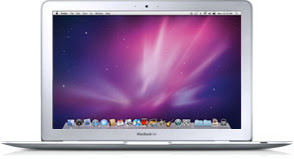
At the beginning of the year, I shed a few pounds, not from some New Year's Resolution, but from going down from a MacBook Pro to my MacBook Air. The Air is speedy, light and is the first step at moving to the cloud, almost by necessity, thanks to its 128 GB SSD disk, about half what the Pro offered. While the Air was a 2009 model, and is already out of date compared to the newest offerings from Cupertino, it is running great and goes everywhere with me.

3) Samsung Galaxy Tab

Regardless of Steve Jobs' comments, the 7 inch tablet form factor is impressive. I haven't fully written up my experience with the Galaxy Tab yet, but it brings the best of the world of Android in a design that fits simply in one hand - perfect for e-mail, photography, surfing the Web, Facebook, or reading books. It starts on the fly with full access to the Android Market, and actually fits in your jeans pocket, or inside jacket pocket. The device is actually very fast as well. It is inevitable to be compared to the iPad, which came first, and some may find it crazy to choose the Galaxy Tab over the iPad, but I've never really warmed up to the iPad, which is used much more by my kids than me. With the Air and Galaxy Tab, the iPad is essentially the odd one out.

4) Apple iPad

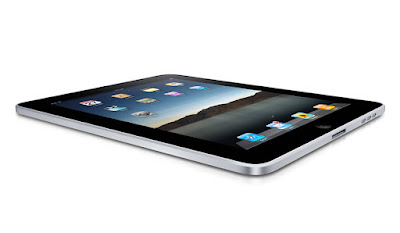
The iPad is going to be #1 on many different lists this year, from sales to innovation. For years, Apple was rumored to be working on a tablet device, and in 2010, it finally came, to tremendous success, just as the iMac and iPod and iPhone before it had. It replicated the iPod experience in a much larger screen, and is the go-to device for my toddlers. The sheer weight and bulk of the device made it less of a fit for me, especially when squeezed by the MacBook Air, but I'd be naive in saying the iPad didn't break open the market for tablets in a big way.


5) Samsung Epic 4G

Having caught the Android bug, and finally having found a phone network (Sprint) that didn't drop every other call (I'm looking at you, AT&T), I was excited by the great number of solid reviews of the Epic 4G, and its inclusion of a full-featured keyboard. The device runs all my Android apps, connects to all my email services in the cloud, takes great video and photos, and yes, lets me type very quickly when answering longer emails or chat sessions. The biggest major drawback I have with the Epic is its poor GPS support, which art times can be debilitating. Regardless of this, I am quite happy with the Epic.

6) Barnes and Noble NOOKColor

I recently wrote up my experience with the NOOKColor, which delivers a nice slim 7-inch Android tablet masquerading as an eReader. It's got smart integration with Barnes and Noble's book supermarket, and syncs with the NOOK app, so I can begin reading a book on one device and pick it up on a second. Added support to transfer my own music and rich media files via USB make it smarter than a dumb eReader and getting to the Web is a few clicks away. While it doesn't come with full Android Market, it has proven extensible, so I would watch this space closely.

7) Google Chrome CR-48 Notebook

Reviewing or ranking my experience with this 2010 device isn't really fair. Turns out I got it today. I have high expectations with the direction Google is taking with the ChromeOS and making our lives more cloud-centric. It's a big reason I started migrating to the Air in the first place at the beginning of the year. My initial impressions are as expected, with tight integration to the Chrome browser (essentially the full experience), a great thin frame and nice keyboard. The trackpad, pilloried by others, still needs some work. Putting a beta product on a pedestal against established innovative leaders like the MacBook Air is not fair, but I would bet that a mix of ChromeOS and Android features will lead to some interesting product pushes in 2011 and 2012 from these teams.

8) HTC Evo 4G

The Evo 4G I picked up at Google I/O this Spring was my first dive into the world of Android, and the way it performed against my aging iPhone 3G was remarkable - giving fast performance and real multitasking in a place I had never expected. The Evo's GPS and access to the Android Market made it very solid, and put me on a strong phone network for voice for the first time in years. The drawbacks to the Evo, including bulk and low battery life, mixed with the lack of a hardware keyboard had me switching to the Epic with no hard feelings.

9) Apple TV (2010 Edition)

Established Apple TV owners since the first 40 GB generation, the long-awaited development of the new Apple TV was well anticipated, and landed with a mixed experience. The machine is incredibly small and fast access to Netflix or streamed videos and TV is great, but the greatly reduced library was a disappointment. Truth be told, the best Netflix access in our home is actually with our Nintendo Wii, so the Apple TV only really gets use when we want a movie in the evening.

10) TyPad for iPad

With the launch of the iPad came the launch of iPad accessories. One of the more useful for me was the TyPad, which combined an elegant looking iPad case with a full-fledged bluetooth keyboard. If you're one to type out full e-mails on the iPad, the TyPad is very cool. The only downside is that once I had a keyboard, I found myself also reaching for a mouse or trackpad. Old habits die hard.

Christmas also brought a second NOOKColor into our home as I bought one for my wife, so now we have two iPads, two NOOKColor devices, and one Samsung Galaxy Tab, so we have 5 tablets to go with our three laptops (counting the CR-48). I am curious to see if 2011 will be as strong. But if you haven't checked out the Sonos S5, Galaxy Tab or are in the market for a new laptop, try out the Air or CR-48. Great stuff this year.

December 11, 2010

Not On Google's Chrome Netbook List? There's Always eBay.

Even for Google, this week was a big one in terms of announcements. In the first two days, the company unveiled its new Nexus S smartphone, running Android 2.3 (Gingerbread), powered by Samsung, and also introduced the new Chrome OS, running on custom Google hardware, along with the much awaited Chrome Web app store.

Interestingly, the distribution of the CR-48 netbooks looks to be limited to about 60,000 units to the bleeding edge early adopters who don't mind things being a little wonky. Unsurprisingly, one of the devices is already on eBay, sporting a price tag of nearly $600.

One more exclamation point, and I'll bid $1,000.

You can't log into an RSS reader or view your Tweet stream without bumping into a tech blogger or influencer who was in Google's good graces and managed to get early access to the first deployment of Google's Web-centric OS with the Chrome Web browser at its core. Shortly after the announcement, many more said they had received e-mail notification they would be soon getting one, and other fans flooded the company's pilot program to fill out a form claiming why they would be worthy to act as a willing beta tester for the Mountain View giant.

The CR-48 Lacks Stickers and Branding. It's Stealthy.

Given the demand and intrigue in the CR-48, it's no surprise those on the outside looking in would want to find a surefire way to try out the netbook, without crossing their fingers and waiting for a blessing from Google proper. On the flip side, it is a little surprising that at least one of those who somehow qualified as a trusted tester is instead trying out the gray market to make a buck.

A few hours into the five day auction, the first two bids have pushed the price up to $560, with $50 shipping in the US. This compares to the price for a new 14-inch Dell Inspiron with 4 GB RAM, a 500 GB Hard Drive, and a 2.4 GHz Intel chip, running Windows 7 Home, on Amazon, retailing for just about $600. There's obviously a premium for getting something first, even if you are getting a netbook with no local storage and an unproven OS.

If you aren't worried about the price and just want to get yourself a new CR-48, take out your credit card and head to eBay. If you think it's a scam, maybe you'll be comforted by the seller's 88 previous sales, and 100% feedback rating. And no, I'm not bidding. I can wait.

October 20, 2010

Apple, Google Agree Web is Future of Software Delivery

Apple's announcement this morning of a Mac App Store, part of OS X 10.7 Lion starting next year, and for 10.6 users as soon as 90 days from now, spells another nail in the coffin for the retail box model of software discovery, purchase and installation. Just as iTunes, Napster and the many other Web-based entertainment delivery models dramatically impacted the retail experience of physically purchasing (or renting) CDs and DVDs, so too will the software industry be impacted by an increased emphasis on Web delivery of applications. Apple has woken up to this trajectory with today's announcement, after years of focusing their app store on mobile devices, while at the same time, Google continues to march down its path of a Chrome Web store for the company's planned OS.

The concept of an iTunes-like software delivery method for purchasing is hardly groundbreaking. Back in 2007, more than three years ago, I was begging for it in a piece I had posted to The Apple Blog (Solving Software Purchases the iTunes Way). At the time, I talked about the benefits of reviews, demos and one-click purchasing for all types of software, and those benefits are a big part of the promised Mac App Store. Interestingly, at the time of my post, Apple had only focused on media with iTunes. The iTunes App Store came out a full year later, and it has taken two more years to bring this delivery method to standard software.

In the last three years, a few major developments have taken place to make this promise more of a reality - including increased access to high speed broadband, required for large downloads, much like with movie rentals and purchases, once deemed nearly impossible, and the gradual doing away with optical drives, which Apple seems to be allergic to in the same way they ditched floppy disks back in 1998 with the first generation iMac.

On my MacBook Air, if I can avoid hooking up the USB SuperDrive, I will do it. I downloaded my Adobe Photoshop suite from the Web, and want all my data to flow through the air. If I ever were to consider Google's Chrome OS, the process would no doubt be the same - only with the browser being the center of the universe, not an iTunes like product.

Interestingly, much of Apple's event this morning was taken up talking about the latest edition of iLife, the consumer products focused on rich media, from photos to video and music creation. First, those apps and their data take up a lot of space, possibly forcing folks to consider backup outside their smaller SSD drives, and second, highlighting how unlikely it is that I will be purchasing iLife from an Apple Retail store in a boxed version. If Apple hasn't yet said that all software installs are going to come from the Mac App store, there will definitely be a push that direction. I already don't want to upgrade from my current version of iLife to iLife '09, simply because there's no way to update over the Web.

Many of us have faster pipes. Many of us are using our DVD and CD drives less and less - if at all. The Web is replacing all these things, and Apple is making a centralized place for us to have fast access, and for them to no doubt make lots more money than they already do - grabbing 30 percent of the pie. It's an aggressive move for them on the balance sheet, one more piece of their "integrated" approach, but the right one and the obvious one. Google's Chrome Web store too is obvious, and exciting for its own right, giving the option for Web services providers to charge for apps that might otherwise be free. As a consumer, I am ready to pay real money for good programs. Just don't make me buy them at retail on a spinning disk.

October 01, 2010

New Apple TV Extends Fragmentation, Cupertino Style

For all the noise around fragmentation in the world of Android, one would think the state of affairs on the other side of the technology aisle would be perfectly unified - with one operating system, one user environment, and one experience where all things play nice. But while it's not as often discussed, my plethora of Apple devices is increasingly fragmented. The newest culprit? The brand new Apple TV, which has an incredible form factor, and some surprises in terms of what's simply not there - making me have to remember what media plays on what devices, and what devices are capable of doing what.

Despite my switch to Android on the phone, I still have plenty of Apple products in my house - from my wife and my laptops, our iPads (shared with the twins), a first generation Apple TV and second generation Apple TV and the newest iPod Touch.

After getting the new Apple TV, and attaching an entirely too expensive HDMI cable (not included) from Radio Shack, I set up the device and browsed to available TV shows to rent or buy.

The first search I made was for "Dexter", the Showtime drama I've become addicted to in the last month or so. Having already pulled down seasons one through three on my Mac, I wanted to pull down season four on the Apple TV. No dice. No results found.

Browsing the available TV networks quickly displayed why this was the case. Apple TV only offers selections from Fox, ABC, BBC and Disney. With Fox being the lowest in the alphabet, I thought it was a bug, but it wasn't that I missed Showtime outright, it just flat-out doesn't exist. CNET highlights how only 3 of the top 25 shows are available, but there's just something odd about knowing content is in the iTunes store (like Dexter) but my new Apple TV can't get to it, while the old first gen one (downstairs) can.

The capability gap between different devices from Apple is already clearly felt within iTunes. The iPad has started a cottage industry of high quality application development for the larger screened devices, which is great, but the backwards compatibility is practically invisible. In fact, if you have iPhone and iPad, you might find yourself buying an application twice, on the same account, for each device, with no discount. With the promise of applications being developed for the new Apple TV, you can see the potential for yet another purchase looming on the horizon.

While Android is clearly struggling with the challenge of bringing 2.2 support to all the latest handsets (and making progress), we see Apple TV running a variant of iOS (mixed with the traditional Apple TV OS), different than that of the iPhone/iPod Touch, with iPads still not having iOS 4, and yes, Macs still being Macs. I don't think it's too crazy, for a company focused on the Open Web (courtesy Daring Fireball) to find a way to tap into the Internet in a very real way and unify access to media and applications.

For now, until this is solved, it seems we need to expect the new Apple TV to have a different set of titles from iTunes than its older cousin, and the iPod Touch or iPhone to have a different set of applications than the iPad or Mac OS. This is real fragmentation, and it's a drag.

May 19, 2010

Chrome Web Store Fills In Questions on Chrome OS

Following Google's introduction of the Web-centric Chrome Operating System, my biggest questions around the project have largely been divided into two pieces - the first being the expectation of pervasive high speed Internet and the second being the availability of high quality Web applications that could replace the desktop environment. And while the first issue's answer depends largely on your location, the second issue is showing serious signs of being filled with this morning's introduction of the Chrome Web Store. At Google I/O today, the tease of the upcoming Web store brought serious intrigue and as one of the major highlights in what was an extensive and comprehensive near two hour keynote. And avoiding all hyperbole, as best as I am able, I came away so impressed with the potential of the Web store that it had me rethinking how the introduction could radically change the paradigms of how we obtain applications today and how we interact with our operating systems, desktop apps and online commerce.

As Sundar Pichai, vice president of product management at Google, explained, customers have long struggled to find Web applications - lacking ratings and reviews. In the world of mobile phones, this has largely been solved with fantastic examples of Apple's iTunes Store and the Android Marketplace, but for Web Apps, there has not been a centralized source to obtain these apps, run these apps and - should the option be available - pay for these applications.

Some Web Apps In the Chrome Web Store

Pichai said the problem pointed in two directions - first in users struggling to find the apps, and second, the developers finding ways to be discovered. Additionally, users' tendency has always been to think Web applications should be free of cost, forcing most developers to go the advertising route to make revenue. The Chrome Web Store intends to shake that up. One major benefit of shaking up the way users find Web apps, developers promote Web apps and Web apps make revenue? Centralizing a source for applications for Google Chrome - not just as a browser, but .

In April, I wondered about how developers were going to have to work in a world with so many different platforms vying for their attention. Developers are having to decide not just between the major operating systems, but also between the different mobile operating systems, like iPhone and Android - with WebOS from Palm also facing an uncertain future in its new home at HP. One alternative, and one that Google certainly hopes will become the future of app development, is to leverage Web standards and code for the browser.

While the Web's origin was around static documents, it is obviously becoming a platform for rich and social applications. New capabilities, many of which leverage the much discussed HTML 5, enable Web application developers to create high quality rich experience applications that run within the browser, not on the desktop.

"The future of the Web is HTML 5," Pichai said, adding that the 70 million Chrome users who use the browser, contrasted with 30 million last year at this time, would have access to the new Web store in their browser every time they started up. And this future demonstrated a number of full-featured applications, not scaled-down options or dumbed down options we've grown used to in a Web browser experience, but the real thing - and sometimes even more.

Today's demonstration from Sports Illustrated's Editor, Terry McDonnell, of the company offering a full magazine experience - plus interactive, updated, scores and rich media, looked like the first real alternative to the print edition I would possibly be interested in paying for - oddly, the same thing people said about apps on the iPad when Apple's tablet launched. And yet, at times, I was thinking that this kind of a Web store could potentially even have more of an impact on the future of Web development than a single tablet could - creating the opportunity for Web applications to make money in the same way that Apple's iTunes Store has, and start to help customers realize the value of high quality apps, based on leading technology standards, that could drive incremental revenue.

If Web services and Web app developers find a Web store - for profit - compelling, this could potentially drive the same kind of gold rush to Chrome's Web Store as we have seen to iPhone and iPod Touch and iPad in the last few years, helping to further promote Google's Chrome browser, and of course, the planned operating system. The more apps available for the operating system, pushing data stored to the cloud, the fewer holes and questions there are around Chrome's future.

This announcement was more than flashy cover photos on Sports Illustrated (which were cool) or seeing a Lego version of Star Wars played in the browser (doubly geeky). This was about redefining the approach to online commerce for Web apps and redefining what we can expect from quality apps deployed in the browser, further paving the way for users to commit to Chrome. It's early, but as McDonnel said, we are "at the beginning of a storm of innovation." While skeptics may see this introduction as yet another hook into Chrome from Google, or offered only to a subset of users on the Web today, it's forging a new approach the other players aren't promoting, and one that benefits both users and developers.

April 29, 2010

EdgeTheory Conversations: HP Plucks Palm, Shelves Slate

Wednesday's announcement that HP will purchase Palm, and its accompanying WebOS, for $1.2 billion, has a lot of people wondering just what the slow-moving Silicon Valley giant has planned, and where Palm's OS will fit in their world, currently dominated with Microsoft software. Can HP turn Palm into a market winner more than just a technology showcase? Chris Saad and I discussed that tonight in another EdgeTheory conversation, where we also hear about Chris' lost opportunity to pick up an HP Slate, meaning he just might need to get an Apple iPad.

Also - we discuss Apple's opportunity against Android and Chrome OS from Google, and if open software should possibly run on closed hardware - especially in light of Apple CEO Steve Jobs' recent comments on Flash.

This and all other EdgeTheory conversations can be found on the dedicated ET Conversations site.

Listen in below:

April 08, 2010

Phones, 'Pads and Platform Plethora Pain


Fifteen years ago, James Gosling and others at Sun helped promote a new programming language, Java, which aggressively promised to allow developers to "write once" and have their programs "run anywhere." At the time, Java aimed to solve the problem of programs being available for one operating system, but not others - most commonly seen with deployment on Microsoft Windows, the gorilla in the market, but not for less-popular platforms, including Apple's Macintosh, Linux, and yes, to a lesser extent, Solaris. More than a decade later, despite incredible progress in the world of standards, and the accompanying growth of the World Wide Web, intended to be computer agnostic, the world of platforms has gotten even more confusing, not less so, forcing customers and developers alike to make irrevocable choices to align themselves with potential winners. Additionally, thanks to splintering of application platforms and sources, customers are being asked to purchase identical products from single manufacturers for different devices, and the more powerful our mobile devices, phones and tablets get, the more this problem looks to only get worse.

Desktop Operating Systems Stable as Chrome OS Looms

For the most part, desktop operating systems have not changed much in the last 10 years. Mac OS X was made available from Apple in 2001, and became the standard since 2002, replacing Mac OS 9. In parallel, Microsoft Windows has seen regular upgrades, as has Linux (and all its flavors). No major competitor has emerged to unseat the big three - although Google's Chrome OS might make things interesting soon.

But Gadgets, App Stores and Platforms Are Proliferating

Where innovation has remarkably changed the world of development lies in two areas - first, mobile and gadgets, and second, the rise of the Web and communities as platforms themselves. While in the early 2000s, we would talk about deploying applications for Macintosh, Windows, or Linux, you now have to also consider writing applications for iPhone, Android, BlackBerry, Windows Mobile, Palm Pre, the iPad, or even if you are coding for Facebook or Twitter. While some code may be reused from platform to platform, development and deployment can be siloed, with different feature sets based on one's computer choice, or different launch dates. And in competitive markets, you can often see one application gain traction for two platforms and its main competition take the others, in an unofficial divide and conquer strategy.

For those of us who remember the huge struggles in the Apple platform in the mid-90s, at times it seemed like we should be thanking our lucky stars for gaining the privilege of installing some second-rate port of a Windows application on our systems. That they even thought enough of us to throw us a bone was to be lauded. In other cases, the Macintosh version would ship months or years later, or we would get one version, only to see three issued consecutively for Windows while we held on to our creaky software.

While things have improved for us Mac folks, just imagine the incredible challenge facing a third-rate bit player on the mobile platform, like Palm's Web OS, trying to get traction and ask developers for their attention - which will likely come only after everything else is solved on all the bigger venues. And the issue of choosing where to code and deploy is only going to get more difficult with Google's Chrome OS looming in the wings.

For the most part, customers are choosing a single operating system and a single mobile platform for their use. They might be Windows people and iPhone users. They might be Mac people who like Palm Pres. They might love Linux and the Google Nexus One. And once users choose a platform of choice, they are almost certainly locking themselves into what's available for them on that specific platform, as titles appear on other devices but don't cross the border.

Buy Into an App Store Ecosystem and You Own That Choice

The reason that Apple trots out the vast number of applications available for iPhone in the iTunes App Store is obvious - showing their momentum, and also giving customers more and more reasons to choose them ahead of lagging platforms. Google's Android platform, which gained nearly 10,000 applications last month alone, is also trying to be relevant through its array of apps. The Motorola Droid radio commercial I heard on my drive home tonight speaks repeatedly about multi-tasking, but also about how many of its apps don't run on those other "so-called smart phones", a not so subtle dig at Apple. If there is a killer app on Android, iPhone users can't get to it, and there are many apps on the iPhone platform that don't run on the Droid. God forbid a customer change their mind and port their number to a new platform - as they would be throwing away not just their call history, but their application library, and would need to start again.

The iPad's arrival into the hands of consumers on Saturday has further exacerbated this issue. While many developers are no doubt excited about a new machine with a robust feature set and near-guaranteed commercial success, they are being asked to develop again for a new platform, update it, and cultivate a relationship with the community there. The race is on for the earliest applications, who think they can pick up a $5 or $10 price point after seeing 99 cents rule the world on the iPhone.

Buy It for the iPhone and iPad? No Discount for You!

And while the iPad's new applications are admittedly nice, don't think you get any kind of shortcut for being an existing iPhone owner. If you've already bought in to Apple's ecosystem approach, and downloaded your fair share of applications, you get the opportunity to do so again, and not with any kind of discount. For example, I purchased the MLB.com At Bat 2010 application for $14.99 for iPhone. Now that I have the iPad, MLB has a dedicated application for that platform, and yes, it's another $14.99. It didn't ask if I had an existing license, and it didn't offer a discount. Meanwhile, even with free applications, we see confusion. The new TweetDeck iPad application, if downloaded, sits alongside the TweetDeck iPhone application, giving you two TweetDecks on your iPad, one big and one small.

TweetDeck's example is an interesting one as well. Having launched with a cross-platform AIR application, TweetDeck worked with Macintosh and Windows on day one. In the ensuing 18 months, Iain and his team have developed dedicated applications for iPhone and iPad. Meanwhile, Seesmic developed a desktop version of their client for Mac and Windows, as well as a dedicated Web site, an Android version, and a dedicated Windows client, called Look. But Seesmic still hasn't publicly made it to the iPhone, let alone the iPad. Even if the pair are not dividing up the market, their inability to easily be on every platform with high quality shows the risks and stress of operating in today's environment.

iPhone Apps in iPad = Classic Under OS X, and Web Site Tweaking Is Nuts

As for those iPhone apps that so seamlessly transitioned their way to your iPad? Yes, they work, and yes, it's cool to zoom in at 2x the effect, but their cruddy resolution makes me feel like I'm booting up OS 9 in Classic mode under Mac OS X again. Running iPhone apps on the iPad is a mixed experience indeed.

Meanwhile, this whole tumult around Apple's iPad not supporting Flash, and Apple launching an array of "iPad Ready" Web sites that look great on their tablet is completely insane. Steve Jobs was once famously quoted (I believe it was in Fortune around the time of the first-gen iPod) that mobile Web site users didn't want a watered-down Web experience, but instead, a full Web experience. He was right. I've already lamented the fact that my iPad's Safari User Agent is interpreted as a mobile device and not a full-fledged computer. I appreciate sites like Brizzly and Gmail that have adapted to make their sites look great on iPad, but they are solving a problem that simply should not exist. If you have to change your Web site to fit a new device, maybe it's the device and the platform who has the problem, and not you. Just like we shouldn't celebrate a site for making a version that works only with Microsoft's Internet Explorer browser, we shouldn't do the same to laud the extra work required to make domains look great on iPad.

As users, we are in a very interesting turning point in the evolution of operating systems and platforms. The Web's ubiquity and the growth of mobile devices as robust computers in their own right means tremendous potential for new application development. We now can get high quality Web and software experiences on our mobile phones, tablets, laptops and desktops - and the success stories of some developers who have struck it rich developing for the iTunes Store and others is giving code jockeys even more reason to compete for our attention. But even as we get more and more choices of vendors, mobile phones, and application stores, it seems we are actually losing control in terms of getting a unified experience and application access across all. The world of platforms as we know it is splintering, and we are funding it. We are choosing to buy not just more devices, but also paying for the applications in new places.

I may not be a Web developer, but I swear some of the best must lament the time when the hardest decision when deploying was whether or not to test your site and Web apps in Netscape Navigator Gold or not - as they now need to choose to code for the desktop, the Web or the mobile platforms, and then choose their favorites on each, and an order in which to release. It's getting crazy out there. Better in terms of quality and reach, of course, but crazy nonetheless.

April 02, 2010

Web Services or Apps? The Desktop Metaphor Is Collapsing.


You can't click a link these days without bumping into news on Apple's new iPad. Some lunatics are already in line at Apple Stores across the country, waiting overnight to be among the first to buy the new device. My e-mail in box is swelling with new announcements of applications that are debuting for the iPad, and Apple released a list of Web sites yesterday that leverage HTML 5 (instead of Flash), making them "iPad Ready". Practically all forecasts expect the iPad to a big success on par with the iPhone and iPod, not a dud, like the ill-fated G4 Cube.

After years of tablet rumors, which initiated well before the iPhone, Apple opted to deliver an iPad that didn't run a slimmed down version of Mac OS X (i.e. Mac OS X Lite) as many had anticipated, but instead, opted to go the route of the iPhone, without a Finder/Desktop mentality, led by Apps accessible from the iTunes Store, with an integrated Web browser, Safari. While we have grown used to mobile devices that download and deploy apps - be they from Apple, the Android Marketplace or for Palm's WebOS, these apps were not designed for a full-size computer, and Apple effectively turned its back on a 25 year history of nested folders.

The debut of the iPad comes at a time when Apple's most notable assumed competition may not be Microsoft, who is by far the market leader in folder and desktop-based systems (and the core software to run atop said machines), but instead, Google. Google in the last few years has emerged to not just be a dominant player in its search engine market, but has risen to be a major player in the mobile phone industry - taking Apple's iPhone head-on - but also the operating system world. Its announcements for a Chrome OS, with the Chrome Web browser at its core, make it a very serious alternative, one that is designed not for a world of apps, but instead, one of Web services and data in the cloud.

The strain between the two companies, now well documented, is seeping into the way the company's employees perceive one another (and their products).

For example, upon reading the news that Boing Boing's Cory Doctorow recommended against buying an iPad, Google's Adam Lasnik shared the piece on Google Reader, adding: "the future is Open, and thank goodness for that". The inference, of course, is that Apple's closed ecosystem, contrasted with Google's belief that they are promoting open standards, is not where the world is headed.

One Googler's Opinion on the Future

In November of last year, I said Google's Chrome OS was not about deploying today, but preparing for a future with Web-centric world, where Web sites trumped applications, and standards like those promoted from the Buzz team allowed for a rich experience free of client software. Google's Chrome OS, unlike the operating systems of today, from Windows, Macintosh, Linux and others, lacks a desktop, or its equivalent. You can't exit out of the browser to see the hard drive, and it's like being at a permanent Web terminal. Applications run in the browser and crash in the browser - without any need to know if that's on Drive C or Drive D, in My Documents, My Settings or My Photos.

Meanwhile, in Redmond, Windows 7 has come and nullified many of the bad feelings about Vista. It's a pretty good operating system, all things considered. But it's not moving the ball forward in the way that the iPad/iPhone/iApps approach is, or in the way that Google's Chrome OS hopes to do. Apple and Google are betting, in no small part, that users will adapt to a new construct of how they interact with appliances. Apple's move seems to be more about manual input and self-contained applications, while Google is maintaining the keyboard approach, but doing away with the decades-old desktop and file folder structure.

Regardless of the over the top headlines asking if Microsoft can "survive in an iPad world", change takes time. While Apple was once seen as an outsider to a big market when they first launched the iPhone, and Google doesn't yet have penetration with Chrome OS, Apple now has significant mindshare and is seen as the one to beat in the innovation scale, but they haven't snuffed out Windows. Meanwhile, we haven't heard what Apple has in mind for Mac OS X Eleven. Will it merge the iPhone OS with Mac OS X, or will the dual operating systems evolve in parallel? I wouldn't be too surprised if Apple found a way to move us forward with the iPad and apps-based computing being the direction, with desktops falling away to the annals of history, but if they went this route, it is going to be a long haul indeed.

January 09, 2010

The Future: Operating System And Application-Neutral Data

We are now growing accustomed to the concept of the "cloud", where our data will be increasingly stored in Web services, not on local disk, accessible from any computer, operating system or browser. But, despite the adoption of standards from major players storing our personal data, the choice of services causes serious vendor lock-in, as the data suite, be it from Microsoft, Google, Apple or other providers, is not only interpreted by their offerings, but stored there as well. This storage and management of our data makes migration between services incredibly difficult, and still leaves us at the mercy of a large company, whose priorities may not be the same as our own.

The time has come to start on a path to true ownership of data by the individual, reducing applications and Web services to the role of filters and containers, rather than hosts, who can propagate lock-in as these services spread to mobile devices and tablets from their desktop roots.


What makes a digital device mine, be it a laptop or a cellphone or an music player, is the personal content that is stored, and how that data is translated, stored, presented and categorized. Similarly, when we make a choice as to our preferred Web services or technology providers, we are, for the most part, passing our content to them exclusively. While we may have made the data location independent, it is far from being service independent, and any potential future switching will have dramatic impacts on time and productivity, including:
  • Complicated export and import of personal data
  • Differences in the interpretation of data between similar applications
  • Potential loss of metadata between services
  • Reduced backup stability as differing instances of our data is housed at differing services
This headache is a major part of vendor lock-in. Today, when I make a choice as to what brand computer to buy, or what phone to purchase, while I may be committing to a brand or a suite of applications, all I am really doing is asking this product to provide its own interpretation of my data, including:
  • My Contacts and Relationships
  • My Music Files
  • My Videos
  • My Photos
  • My E-mails and Hierarchy
  • My Documents
  • My Bookmarks and Hierarchy
Increasingly more important than the actual data itself is its metadata, or data around data. How is the data structured, meaning... Do I have my e-mails in folders with subfolders and rules? Do I have photos in specific albums? Do I know how often I have played a specific song or genre? When were documents created or last edited?

Today, for the most part, we are choosing from three major service providers, although there are alternatives. We can select Google, who offers Google Contacts, Calendar, YouTube, Picasa, GMail, Google Apps and Google Chrome for the majority of our needs. We can, instead, select Apple and use Address Book, iTunes, iPhoto, Mail, and Safari. Or, we can stick with Microsoft, and leverage Outlook, Windows Media Player, and Internet Explorer. (Or their online equivalents)

Despite standards adoption, not all programs interoperate well. No doubt there remain issues with meetings from Microsoft Exchange being received by Apple Mail, and the integration of Web browser bookmarks and Web history is not shared between Google Chrome and Safari. These minor problems are greatly magnified when you consider the potential for future switching, as you migrate from one platform to another or one computer to another - largely because in every case, the applications themselves, even those that are Web services, are storing our data for us, and interpreting it in their own way.

I think it is time for a change, that lets us own our own data, turning the situation on its head.

Instead of hosting our own data with the service provider of the day, we should host our own data in a standard format, which will be adopted by the leading providers, whose applications will tap into us directly, and pull down our data and its metadata. If I chose to log in with GMail one day, I would authenticate who I was, and GMail would pull down my e-mail stream, complete with e-mail activity history (such as replies and forwards). The data would not be stored on Gmail, but instead be more like a read-only process, whereby changes to data, including sent items, would not be stored in GMail, but written back to my personal "cloud", if you will. Similarly, if I opted to log in to Microsoft Outlook, tapping in to my own, authenticated, account, I could browse my contacts in their application, through their filter, but the data would reside with me.

Hosting one's own personal cloud with our own data is not an end run around large corporations in fear of Big Brother, but instead, for real, true, portability. In this situation, a longtime iPhone user could pick up an Android phone, enter my own personal ID (be it through OpenID or some other standard), and pull down my details into all of Google's native applications. Similarly, I could log in to any Microsoft, Apple or Google powered device and become me, not with my data hosted on the new machine, but with my data being read, like a Web page, on that device, in their own lens.

Even as we on the Web are rallying around these concepts of standards, and the cloud, we are seeing the concept of vendor lock-in be as true as ever. The switching costs from hardware device to hardware device, OS to OS and Web service to Web service remain completely too high, and the way around this problem is to take back our data, make it personal, and enforce standards that get the major players to come aboard. While we may not all have all the broadband access necessary to make this a solution today, it's 2010, and we should be well beyond the same issues we have been facing in computing for the last 20 years.

So how do we make this happen?

November 20, 2009

The Chrome OS Release Is Not About Now, It's About Next.

Yesterday, as most tech outlets noted, Google previewed their much-awaited Chrome Operating System - and in parallel released the code for the operating system to the open source community. By the end of the day, sites like Gdgt had compiled virtual machine capable installs of the early alpha system, and geeks, including me, were tinkering with the system. Unsurprisingly, there were near-immediate reviews, and some calling the news a disappointment. But for me, the news was not so much about Chrome OS being ready to go, but instead Google delivering on a promise, and showing its cards, before they had to, to let us know what's progressing in Mountain View.

Google's success and growth over the last decade has not been without its detractors. The company, which could once simply be described as a search engine, now has its reach in a dramatic number of Web applications and services. I tend to be rosy on the company's expansion, and even asked last month if it was at this point possible for somebody to use Google software exclusively and not lose functionality.

Google's preview of the Chrome OS was more than a product release. It was a milestone in a vision of a Web-centric world, one in which we are increasingly living. For the vast majority of my own activity, I am online, not using software. I intentionally use some applications, like Microsoft's Office suite or Adobe Photoshop, quickly, and then close them just as quickly, as to not slow down my computer's performance. Google's Chrome OS is the latest development in a vision that says our activity will be online, our data will be stored in the cloud, and applications that have traditionally been desktop software will make their way online.

Under no uncertain terms, I agree with their vision. This is happening and it is happening fast.

When I booted up VMware Fusion last night, and turned on the Google Chrome OS for the first time, it didn't come with an instruction manual, asking me only for my login and password - which corresponded with my GMail account. Logging in took me to the now-familiar Chrome browser, the starting point for the next generation of computing. While today, the experience is not dramatic, thanks to us already being familiar with their browser on Macs and PCs, it was a checkpoint that this was real and happening. There was no way to move the browser off screen and get to the equivalent of a desktop, for it didn't exist. There was no C: drive or System folder. Just the browser and an infinite Web that is capable of taking me anywhere.

So with due respect to my good friend Jason Kaneshiro, who writes: Google Chrome OS: I Don’t Get It and ReadWriteWeb's Sarah Perez, who asks Was Chrome OS a Disappointment?, the main concerns I have seen voiced around limitations on what the OS can or cannot do are much like the concerns people had when the first-generation iMac shipped without a floppy disk drive and ditched Apple's proprietary cables for the new Universal Serial Bus (USB) standard.

Google promised us a new operating system built on the Chrome Web browser. They delivered. They gave us more information yesterday showing that they were working on it. They immediately gave back to the open source community and gave us a way to start tinkering. This is not a situation of ditching the Mac or a Windows 7 machine today, but instead, about pushing us forward to a new reality. If we choose to stay in one place clinging to our old ideas, we will only get further behind.

October 29, 2009

Could A Real Apple Fan Completely "Go Google"?


As a Mac fan in the 1990s, it was a lot easier to understand who the good guys were and who the bad guys were. Apple was very good. Intel was bad. Adobe was usually good. Microsoft was bad. Very bad. Evil. But over time as we have morphed into the latter part of this decade, Intel switched teams and became good. Meanwhile, Adobe looked less like a close friend and more like a despised ex, as Microsoft went from hated bully and thief to playing the role of crazy uncle who nobody really likes but puts up with because he's not going to disappear. The hardest to label? Google, a younger cousin who everybody really likes, but just might be too smooth to be trusted, even as it gets too popular. Now the stage is set for an awkward family reunion - as Google and Apple are so overlapped, tech fans have the option to choose between the two for practically their entire digital life, and the loyalty once sent Cupertino's way, exclusively, is getting some serious competition.

Over the last few years, if one can look beyond the striking hardware and arguable operating system differentiation between Mac OS X and Windows PCs, Apple has unquestionably led the way in terms of seamless integration between applications and devices. The company's iLife package ensures that media is treated in a similar way across multiple applications, and its user interface guidelines protect the users from odd menu behaviors that change between each program. Meanwhile, the company's iTunes/iPod/iPhone juggernaut has made managing media easier than ever before, especially when one considers the addition of the fast-growing App Store and the good, even if not given much respect, Apple TV, which brings the core of the store to the core of the home.

But while we Mac fans may have been resting comfortably as the Mac vs. PC commercials made us giggle with egotistical self-pride, and the company's balance sheet has grown ever stronger with quarter after very profitable quarter, Google has been changing its spots - morphing from search engine and advertising powerhouse to a Web services monolith that can go head to head with almost every single Apple product out there. As the company integrates its many different products, they too may offer the integration we have always come to expect from Apple, but in an open, Web-focused way. And with every single new announcement, Apple fans have to start thinking if their future is one that is Google as much as it ever was Mac - and if "Going Google" would be that bad anyway.

If Mac OS X is the platform on which all Apple software starts, so too will be Google's Chrome OS. We know it's coming, and some sharp engineers are slaving away in Mountain View to capture the flexibility of the Web and make the cloud the equivalent of your hard disk.

Apple's Safari browser, the built-in Web browser for Mac and for iPhones, is equally matched by the Chrome browser on all major operating systems and on Android as well.

The iPhone and its 80,000 to 100,000 applications in the iTunes Store are being challenged by Android's new fleet of phones, led by the Droid from Motorola, and its rumored 10,000+ apps.

Apple's Mail? Easily matched by GMail. iCal? See Google Calendar. iChat? Google Chat. iMovie and iDVD? Well, it's not the same thing, but you would be hard-pressed to say YouTube doesn't win that battle. iWeb? Really? See Blogger.

On the professional side, Apple's iWork sports Keynote, Pages and Numbers. One has to wonder why they even released these apps, as they're not exactly keeping Microsoft at bay, and I don't know anybody who uses the last two. I use Pages once a year to do our Holiday letters home, and that's it! You better believe that Google's online office suite of Google Docs, Spreadsheets and Presentations is the real deal. Beyond that, do you expect Apple's iDisk to trump GDrive? Will Mac OS X Server beat out the Google File System (GFS) or can you expect XServes to replace Google's commodity rack servers in their datacenters around the globe? Not likely.

This isn't a rant stating that Apple is doomed. Far from it. After all, Google doesn't "yet" make excellent laptops. But I've tried the Motorola Droid with Android 2.0 and it's good enough that if iPhone were not an option, it would be an easy second choice. I find that I am using my Apple OS and my Apple Web browser to go Google, not just for the search engine, but all the downstream Google services. (10 of which I highlighted last month)

Google spokesperson and king of anti-spam Matt Cutts said his October goal was to avoid Microsoft software, a task made easier than ever now with Google providing an alternative just about everywhere. But I wonder if it's possible to do something very different - use ONLY Google software for a month. That would mean using the company's Web browser exclusively, and their office suite exclusively, and their mobile phone OS exclusively. That would mean using GMail and Google Talk and Google Wave and Google Calendar and Google Reader instead of Outlook or Mac Mail. I bet we're very close to this happening.

On Wednesday, Google also announced some of their first forays into Music search. This is an area where Apple still has the clear advantage - with iTunes. But Google offers Pandora on the Android platform, so iTunes isn't needed. Maybe I could push them to buy Spotify, and set up a killer alternative to iTunes with the Google logo? That would be something indeed.

I am a Mac guy. Maybe I'm less of a Mac guy than I once was, but I still trust Cupertino. That said, Google is growing on me in a big way, and they are the real alternative - something Microsoft never really was. Maybe soon I'll also be going Google in a way I never expected.

August 30, 2009

Who's to Blame for Snow Leopard Disabling My Adobe CS4 Licensing?

Yesterday, like many other Mac geek faithful this weekend, I got my hands on a copy of Snow Leopard, the name of Apple's latest operating system upgrade, Mac OS X 10.6. Though I knew it reportedly had few major feature enhancements, all signs online pointed to it being a harmless upgrade. Even comments around Adobe CS3's having issues pointed to clean sailing with CS4. But my experience, so far, has been anything but clean, and it's not exactly sure what caused the issue, or what will be needed to solve it.

As you may recall, in May, we had to do a little song and dance with Adobe's tech support team to download the full version of the company's CS4 product. But since then, I've been using the product suite practically every day. In fact, practically every blog post you see here features screenshots or graphics that have gone through CS4. But this one won't, unfortunately, and it's like I am operating with one hand behind my back.


My Photoshop CS4 Forgot I Had Permissions to Use It

The issue is an odd one. When trying to start up any of the CS4 products, be it PhotoShop, Illustrator, In Design, or the others, I am simply told that "Licensing for this product has stopped working". The error encourages a restart, and yet, following restarts (plural), the issue remains - suggesting I tell tech support, which I will, but am not extremely excited about, especially after May's fun.


Illustrator Mocked My Trying to Launch It As Well

I have to assume that the issue has arisen as a result of Snow Leopard clawing its way on to my Mac. After all, Photoshop worked before the install, and doesn't work after, and nothing else changed. So far, online repositories aren't much help, and it's not clear which of the three players is at fault - Apple, Adobe, or me. (It could always be the user's fault). I have seen others say their CS4 apps are working great with Snow Leopard, but mine sure aren't. Maybe it's because they had the retail boxes, and going for the download version is coming back to bite me. I sure hope not.

I sent a note 1-1 to an Adobe rep who wrote me back in May, and look forward to seeing if she responds Monday. I'd be curious to see if this is a "Louis-only" issue, or if this is more widespread, and see why this is happening. Until then, get used to text only, or big juicy screenshot images with no resizing and cropping.

August 01, 2009

Will The Mac OS X Dial Go All the Way to Eleven?

Apple's Mac OS X operating system is almost a decade old. After having gained access to the Mac OS X Public Beta for a cool $29.95 way back in 2001, and followed Apple through all the point builds in the ensuing eight years, from Cheetah (10.0) to Puma (10.1), Jaguar (10.2), Panther (10.3), Tiger (10.4) and now Leopard (10.5), with Snow Leopard (10.6) on the horizon, I've seen Apple meticulously add features, improve functionality, introduce new applications, and redraw the user interface more than a few times. But I am honestly wondering what Cupertino has in their mind for what's next. Why is nobody talking about how the company could follow up with an encore, Mac OS XI (or Eleven), that could change the game again?

An Already-Long Life for Mac OS X

That Mac OS X has survived as long as it has is remarkable already. Mac OS 9, its predecessor, debuted in October of 1999, and its last bug fix release (9.2.2), was issued in December of 2001. Similarly, Mac OS 8 debuted in July of 1997 and got its last update, to OS 8.6, in May of 1999, another two-year stint. Only Mac OS 7's six year run comes close.

Now, while it's true that the long tenure of Mac OS X could be as much related to a new approach to version numbering on Apple's part as anything else (for example 10.5 could have been renamed 11...), part of me thinks the OS is getting a little long in the tooth. Nothing in Snow Leopard excites me, though I no doubt will upgrade to that as well, just to stay current (and some apps may require it). And some of the same major market forces that made the iMac a success are the same ones that are changing the game for what we will expect in an operating system just a few years from now, no doubt.

Somewhere deep in Cupertino's R&D labs, I hope there are some extremely talented engineers thinking long and hard about what's next, and what kind of aggressive changes Apple can take to leverage technologies that simply were not around in 2001, the last time they had to tear down the old and build up the new.

The Desktop Is Giving Way to the Browser and Cloud

Google's Chrome OS and the rumors around Crunchpad's browser-only interface (with no hard disk space) are two volleys into the abyss of what's next. Apple was smart to grasp onto making the iMac one of the easiest ways to get onto the Internet. Apple was a fast follower, debuting the iTunes store as a massive Internet-powered e-commerce site for digital media. But Apple and Mac OS X is still very much driven by the same framework that has existed for decades - utilizing the desktop metaphor, with a Finder, and applications, which run independent of the browser or "the cloud". And the very media we are buying from the iTunes store, be it music, video or applications (for the iPhone) is stored locally on hard drives.

Mac OS X Eleven (or Mac OS XI, whatever they call it) is going to need to compete in a new world that will likely have a grown-up version of Google's Chrome OS, a successor to the already-respected Windows 7, and all matter of other operating systems from netbooks and mobile alike. And while the world does not yet have the ubiquitous high speed broadband needed for always-on mobile cloud computing, more people will, and more companies are working to make that a reality.

What Will the Future of the OS Be?

In the early 1990s, we saw plenty of hype from companies like AT&T who rallied around the idea of a virtual assistant, who would monitor your data and your appointments - someone with whom you could ask, using natural language, a question, and expect a familiar reply. A fun fantasy, people haven't yet realized this dream, and it's not clear that's the way we want to interact with our computers. In addition, Apple's approach to search has not always been the best. Sherlock is long-forgotten, and the company has turned to Google for search on the desktop and iPhone browsers.

The next operating system, from Apple or anybody else, will not be about even fancier, cooler, graphics, or wearing virtual reality glasses, or seeing your file folder structure in 3D. But it will have to see the same kind of metamorphosis and dramatic step changes that the Internet has seen over the last decade. While the Web has grown up, from flat gray backgrounds and purple text links, to full streaming live video and interactive multi-lingual conversations, the desktop is waddling alongside - Steve Jobs' baby who nobody has the heart to tell him has gotten ugly.

I've ridden this ride on Mac OS X to 10.5.7 where we stand today. 10.6 is coming. But I want to start hearing about the future. I want to hear about leadership and authority. And I am very curious if Apple can lead the way in a world where Google is king.

July 07, 2009

Google Says Yes to Launching An OS (Based on Chrome)

That sound you just heard was the very big "other shoe" of Google being dropped. Late Tuesday night, the company announced on its official blog that it is going to soon be releasing what it calls the Google Chrome OS, a lightweight operating system, initially targeted at netbooks, but aggressively said to be their "attempt to re-think what operating systems should be."

This highly anticipated move is an extension to the company's Web browser initiative, launched just a short nine months ago, and puts Google in direct competition, once again, with tech titans Microsoft and Apple.

Though the blog post does not feature all the eye candy one typically looks for in a new operating system announcement, the author does spell out a few things. First, it will run on both x86 and ARM chips, and is considered a different project than that of Android - which many others had speculated would be Google's first foray into the world of operating systems. The post differentiates between the two by saying, "Android was designed from the beginning to work across a variety of devices from phones to set-top boxes to netbooks. Google Chrome OS is being created for people who spend most of their time on the web."

The focus on those people who spend most of their time on the Web sounds like it would be in very close proximity with the CrunchPad I covered over the weekend, but funded by a company with thousands of employees, not a few dozen.

The new push from Google also will no doubt further complicate the relationship the company's CEO, Eric Schmidt, has as a board member at Apple. Already forced to recuse himself during discussions of the iPhone, thanks to the Android platform, Schmidt may find himself recused from discussions of Apple's OS, and any future tablet or tablet OS. With this kind of momentum, just maybe he won't play an official role on the board at all?

I wouldn't anticipate seeing builds of the new operating system any time soon. Google says they have a lot of work to do, and will be relying heavily on the open source community to push the project forward. They hint to stay tuned for more updates this fall. No doubt, many will be on the edge of their seat.