I took this photo in Motorola's Silicon Valley office lobby last fall just prior to a meeting. If you look closely, you can see the logo on my shirt reflected in reverse in this shot. In the event anybody wanted to see if they were committed to Android, this should provide one clue.

Showing posts with label Motorola. Show all posts
Showing posts with label Motorola. Show all posts
August 15, 2011

February 18, 2011
The Curious Myth of the Tablet Operating System

iOS Unifies for Tablets and Phones, While Android Splits and Regroups
Despite Google's warnings that Froyo was not designed with tablets in mind, Samsung sold millions of 7-inch Galaxy Tabs to consumers, while Barnes and Noble set sales records for its NOOKColor, similarly built on the 2.x OS line, and other manufacturers tried their hand at the growing Android tablet market. As a user, I've been very pleased with both the Galaxy Tab and NOOKColor, which feel as natural as a large Android phone, and have significant parallels to the way the iPad felt after years with iPod Touch and iPhone.
From the demos and reports of Honeycomb's new UI, the upgrade looks very impressive. But if major steps were taken with Android to make it a superior tablet experience, then why the plan to unify the tablet and phone experience again - a la iOS?

Curiouser still, at least to me, was how Apple was so successful in framing Google's comment on Froyo and tablets at the same time when iOS itself was not necessarily optimized for tablets. At the same time when Froyo 2.2 was the only answer for both phones and tablets, iOS 4.2 was the only answer for both iPhones and iPads. Yet, one strategy was seen as right and the other wrong. Meanwhile, previous to this, iPhones and iPod Touch gained access to iOS 4 while iPad was still on iOS 3.2 - so yes, there was a time when Apple had a phone OS and a tablet OS, which was seen as okay, a temporary issue, and now that they have a universal OS, where the phone looks like the tablet, this too is accepted. Win, win!
As a Galaxy Tab user, running 2.2 on a 7-inch tablet, it's clear there are a few steps Google could have taken to make it more ready for tablets. Amusingly, there are even error messages that refer to it as a phone when you need to charge its battery, as Froyo assumes a phone. But it's a great device, and in my opinion, comparable to the pair of iPads we have in our home, just in a more portable device.
Which leads us to the next discussion... where do phones leave off and tablets begin? Our 32 Gig iPod Touch looks like a tablet. Go a little higher to the Samsung Epic 4G and HTC EVO and we're at a 4-inch screen. The Galaxy is 7 inch, the iPad 9.7 inches... and so on. If it's a flat screen device with a touch interface, is it not a tablet? And should one OS rule both? Seems to me that Android and iOS both do fine at any size, and 2.2 is a great option, even if 3.0 is even better.
Google may have a head of steam behind it now, one that will accelerate when Honeycomb-based tablets are more easily available at lower prices, but I think they could have saved themselves some serious PR headaches if they'd just played the Apple card of what was shipping was good enough.
January 08, 2011
Verizon's Big Year Is Much More than Just iPhone
 After years of living in the barren AT&T wilderness, iPhone fans and desperate would-be switchers are eagerly awaiting the widelyreported planned announcement that Verizon will finally make it to the iPhone 4. Depending on who you read, it's thought the availability of iPhone in CDMA wearing a new carrier's clothes could boost Apple by another 10 million units. A good number of those will no doubt come from existing iPhone users switching to AT&T, while many more could be net new - a patient bunch who kept their loyalty to Verizon, and avoided AT&T, no matter their curiosity into the iOS. Part of me wants to be skeptical that this will goose sales as much as anticipated, but I've long learned to always pick the "over" when it comes to Apple.
That said, the iPhone is just one bit of good news for Verizon, which is becoming a go-to partner for some of the more intriguing devices elsewhere in the early adopter tech geek ecosystem. The ChromeOS-based CR-48 notebooks from Google come with a bundled Verizon 3G card, which offers freeloaders like myself 100 MB of bandwidth a month before even paying a dime. More costs extra, of course. Additionally, Verizon is going to be the go-to-market partner for Motorola's new Xoom tablet, which I saw demoed at CES this morning, and was awarded best in show.
CES was draped in banners from Sprint touting their 4G experience. It's what I use on the Samsung Galaxy Tab and the Samsung Epic 4G as well. Sprint has done well for my family, after we switched from AT&T and iPhone simultaneously this summer. But Verizon looks like the much-desired partner for the elite products, and when exclusives come up, Verizon is there.
Following up on my introductory post last week to the CR-48, I gave the notebook a run as being my primary device all of CES. I turned on the 3G access from Verizon yesterday morning, and took the laptop everywhere, avoiding power plugs, to test the battery, and disabling WiFi. Unsurprisingly, the laptop gave at least 8 hours of use without a charge, and the 3G speed from Verizon has been plenty fast, from the hotel, from the otherwise-congested CES event, and now at the Las Vegas airport.
Obviously, the CR-48 trial units are early days for the device. One would assume that if Google wanted to provide a strong experience for users, they chose partners carefully - as did Motorola. Verizon will also be there with the new Droid Bionic, which is expected to ship after the iPhone hits stores, possibly as soon as the end of the month.
My experience with Verizon on the CR-48 has been nice. While I haven't tested out a wide variety of geographies, I've never suffered for coverage, and the CR-48 is smart enough to tell me just how much data I have left on the free plan before I'd be asked to pay up. I've managed to crank out 75 MB of use in two days, so I have 25 left. If I were to turn off WiFi permanently, and just use the device over 3G, obviously, I would need a bigger plan and would be sending some dollars Verizon's way. The convenience of anywhere high-speed Internet can't be understated, of course. Behind Diet Coke, it's probably my #1 addiction.
We've learned to live in multi-vendor homes with tablets and phones and laptops everywhere. But for the most part, I think folks are sticking with a single carrier. Is it common to be paying out to T-Mobile, Sprint, AT&T and Verizon each month? Probably not. If Verizon manages to continue as the go-to partner for Android, and can add on its share of tablets and notebooks, as well as the iPhone (finally), you could be seeing the kind of subscriber and revenue growth for them that AT&T has been getting the past few years thanks to Apple's exclusivity.
As for me? I've still got 24 MB on this free plan, and once I hit zero, it's either WiFi, or I add Verizon to my list of monthly bills. My wife will love that.
January 05, 2011
There Are No iPad Killers, Only iPad Alternatives
 Tomorrow I will arrive fashionably late to the Consumer Electronics Show (CES) in Las Vegas. Arriving ahead of me have already been a number of tablets, including new additions from Samsung, including a WiFi-only Galaxy Tab, and Motorola's much-anticipated Xoom, running Android 3.0, Honeycomb, designed for tablets, not phones. The new devices, especially the new Xoom are being talked up as serious iPad alternatives, or "killers" if you're crazy. But guess what? None of them are going to kill the iPad. In fact, it's more than probable that Apple is not only going to end 2011 as the unit leader in tablets sold (from any one manufacturer), but will set quarterly sales records for the company - which has been on an incredible roll, potentially poised to be the most valuable company in the world, ranked by market capitalization.
As any tech watcher knows, sheer specifications and feature counts do not "kill" anybody or promise a "win". I personally really enjoy the Samsung Galaxy Tab and have been using it much more than my iPads. I also think Android is great on both phones and tablets, and the Honeycomb preview shown by Google today is impressive. But there's something special about Apple that ensures people remain loyal, and the iPad has defined the market, with others following their lead. John Gruber of Daring Fireball called it "emotion". I simply call it preference. Many people have a very strong preference toward Apple, and this will continue in the face of larger screens, thinner bezels, and faster CPUs.
One of the major features listed regarding the Xoom is its dual-core 1 GHz processor. Do you even think the average iPad user knows the speed of their device?
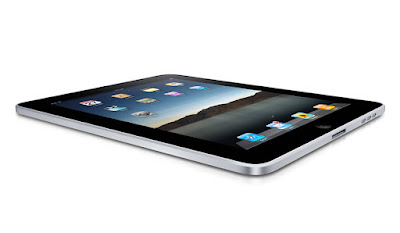
Sales reports from the most recent quarter said the Galaxy Tab, with its non tablet optimized OS, sold a solid 1.5 million units. That's pretty good! But analyst predictions are pegging the iPad to sell as many as 30 to 65 million units in 2011, and rumors are already buzzing about the features in iPad 2, which is assumed to trail CES and steal away thunder from this week's announcements.
Here's a fail-safe prediction for 2011. There are no iPad killers, just like there were no iPhone killers or iPod killers before them over the last decade. Apple has carved out an extremely lucrative niche focused on good products. The iPad was required to carve open the market for tablets, which had gone practically nowhere until Apple jumped into the fray. With all the different Android tablets (and yes, some Windows tablets as well) out there, 2011 is going to see a lot of comparisons of market share and unit counts. The iPad will probably see its share eroded significantly, just like iOS has flatlined, under assault from a flotilla of Android phones. But Apple is going to continue selling millions of iPads every quarter, and they are going to be preferred by a ton of people.
I am excited about the innovation in this space, and the speed of which we are seeing the Android-based iPad alternatives compete. I expect to see some fantastic hardware starting tomorrow and Friday at CES that doesn't sport the Apple logo. Competition will absolutely push both sides better and further than they would on their own. But like I said ten days ago, it all comes down to preference, and the specifications of the new devices at CES aren't going to make most iPad owners blink. The war is not to convert those who are already drinking from Cupertino's vat of holy water, but instead, to persuade those who haven't yet adopted tablets to consider something else.
There are no iPad killers, only new choices and choice is a fantastic thing.
Subscribe to:
Posts (Atom)