December 29, 2010

Bubbalon: Fun Ratings, Reviews and Sentiment Sharing

On the Internet, it seems there's little more we enjoy doing than telling people what we like and what we don't. Facebook's Like button is becoming ubiquitous, and there are many sites that let you review movies you've seen, give star ratings to products you've purchased and restaurants you've visited. Yelp, Amazon and Rotten Tomatoes have built successful businesses with reviews at the core. Reviews are also a major reason I became so hooked on Blippy - not just getting to share my purchase habits, but to tell you why and learn from your own experience. A new-ish startup called Bubbalon recently caught my eye, and they've managed to make community ratings and reviews of products, people and events fun - delivering a sentiment rating that you can dive into, not just globally, but across your friends, or even across demographics you choose.

The objective of Bubbalon is to surface how people feel about products, brands or people. Of course, to encourage participation, users are provided ratings derived from their activity on site, from rating sites to leaving comments, adding objects and acting as a moderator.

Rating McDonald's On Bubbalon

Unlike some niche sites that focus on a specific topic, Bubbalon's treasure trove of objects is open-ended, from big brands like McDonald's and Samsung Electronics, to products like the iPhone 4 and Samsung Epic 4G, people, like Glenn Beck, or even blogs. It turns out louisgray.com has racked up 10 reviews - most positive.

A Discussion on Diet Coke Where I am Outnumbered

But beyond the total rating scores, reviews and comments, Bubbalon has more than a simple slider for each object. The site remembers your own rating for each object, of course, but also shows the world's average score, an average score from your friends on the site (which you can synch with Facebook), and if you're aggressive, you can even tell it to show you a rating based on gender, location and age criteria. This way, if you want to really find out what 18-40 year old guys in California think about McDonald's, you can get that score.

Reviewing Samsung and Adding a Comment

Incredibly, one of the more interesting popular items on Bubbalon has been the East Coast Blizzard 2010 page. While some folks are calling it "Bad", many more are saying the storm is "Excellent", saying they love the snow. This current event is one of many News items that have hit Bubbalon, from the BP Oil Spill to the Ground Zero Mosque, and the Rescue of Chilean Miners.

While I am newer to the site, and many other folks have a great deal more history, you can find my profile here. It'd be a great way to quickly drop in and add sentiment to any of the products or people you like or dislike. Bubbalon demoed at the TechCrunch Disrupt event this fall and was written up by Down the Avenue, including aspects of their location sync with Foursquare. There's an option, should you dare, to pull your Foursquare checkins to Bubbalon and rate them there.

You can follow Bubbalon on Twittter at @bubbalon. I am on Bubbalon at http://bubbalon.com/user/1011.

December 26, 2010

The iPhone Fanboys Can't Handle the Truth On Android

The big news in this weekend's blogosphere circles around predictions that 2011 will be even more dramatic a success for Android than 2010, and unsurprisingly, the iPhone-aholics are coming out of the woodwork to tell us that this is a terrible thing, cornering the discussion into one where we are supposed to believe Google's march into smartphones is only winning due to price, and that the iPhone 4 (and its successors) are dramatically "better", however that is measured, than Android alternatives. This position is no better exemplified than by Robert Scoble's post saying Fred Wilson and Fortune are Right About Android (but I hate it). This follows onto Fred's position that entrepreneurs and VCs need to get ahead by investing in Android and not iOS. This mirrors my comments from July when I said mobile app developers should look to Android before iPhone and iPad.

The differences between Apple and Android this time around are not like Apple and Microsoft of 1995, even if this is the lazy man's way out to compare the two battles. Scoble says, pleadingly, "I sure hope Steve Jobs has one of those moments where he shocks the world again and keeps this game interesting." I'll tell you what, this game already is interesting, and not because the rest of the world is waiting to see what Cupertino develops in an effort to copy its innovation extremely quickly.

I once felt the same way about my iPhone and still feel the same way in many regards to my MacBook Air (even though I am currently typing this on the CR-48). But the reality is not that Apple has held the exclusive to innovation in this space over the last 12-24 months or even longer. Android led the way in true multitasking on the phone, offers a superior GPS experience with top-notch places and maps, and is years ahead of Apple on voice search, it seems.

On Christmas, a friend of mine asked if I had ever shown my kids "Ivor the Engine" on YouTube, similar to Thomas the Train who is well known here. Even though I was uncertain to the pronunciation, I simply clicked the voice search button on my Samsung Epic, said "Ivor the Engine YouTube" into the phone, and I had a video playing in full color in seconds. Android made that happen, and while I am eager to see Apple integrate Siri, who it purchased at the beginning of 2010, I believe the tremendous investment Google has made in search and voice search specifically will keep them ahead here.

The truth is that Android can go feature by feature against iPhone now. iPhone is not yards ahead of the competition, and while there may be some clear places where Apple is ahead, it comes down to an individual's preference now, including their choice to have a keyboard (which Apple seems not interested in doing), their choice of carriers (still limited here, even if Verizon comes to the party), or many other factors. This is not like the Microsoft of the 1990s, where Apple's lead was obvious and Windows 95 was arguably the first usable OS on that platform to be considered Mac-like.

The way you can tell when tech connoisseurs have crossed the line from data to emotion is when they use blanket phrases like "In my usage of the Android-based Samsung Nexus S, I’ve found it’s still behind Apple’s iPhone in almost every way," which Scoble drops in his post. If you strongly believe a high pixel density Retina Display is demanded, great. If you think FaceTime is something you use all the time and it trumps Qik, great. But blanket statements don't work for the true nature of the mobile landscape today. Android really is that good.

When I first took the plunge into Android after Google I/O, I was almost as wary as when I had to sit down with a Windows NT box for my first Valley job. I was sure it would be terrible or I would be lost. But I kept being surprised by how the device just made sense, and how the device in many ways was better than my experience on the iPhone. In the six months since, we've only seen Android phones improve, with the expansion of Samsung's Galaxy S series, the Droid Incredible, and the introduction of Android tablets like the Galaxy Tab and Barnes and Noble's NOOKColor. I voted again on Android this Christmas when I bought my wife the NOOKColor, which she'll be using to read voraciously at the expense of her iPad use, with a slimmer form factor and reduced weight.

What was wrong about Microsoft's monopoly position in the 1990s was that they used their market strength to thwart innovation and win with business muscle and side deals rather than through value. That is not what is playing out here again. That Apple has opted out of some business relationships and reduced its potential routes to market while Android hasn't is their choice, and it's making them a ton of money. Apple is still winning as a company and will be a strong #2 in this market, and #1 in profit, as that's their focus.

If the assumption is true that Android is expanding primarily due to low-end handsets, we should be asking Apple for an iOS compatible option at a lower price point. Where is the MacBook or Mac Mini of iPhones? If the company ends up being niched at the top in price while others are providing more options, that can't be a strike against Android, but instead a business decision on the part of Cupertino.

The world of mobile is better with a strong and smart Apple in it. But don't get blinded by the Apple fans trying to define Android as a cheaper, inferior solution. It's not. Get your hands on any high quality Android device at a Sprint store or a Verizon outlet or an AT&T store or a Best Buy to try them out. Even an open minded Apple fan can respect what's happened and should be able to see innovation taking place as well as serious market momentum.

2010 In Web Services: My Top Ten Sites


As with my top gadgets list for 2010, this year's list is personal. It's what I use, and what I found had the most impact for me in 2010, which I found myself using every day. The services themselves are limited to being Web-based, so I am not talking about those which are primarily iOS or Android apps, but if they do have a mobile equivalent it helps. What I've found in the way I use the many Web services and sites that take my time is that I may find things first, and I don't always enjoy those which are most popular, but once I do find real value, I am as loyal as they come.

That said, here are the sites that had significant impact on me and my family in 2010. Your mileage may vary.

1) Redfin

2010 saw the arrival of baby #3 in our family. Braden, who joined us in late August, made his potential known at the beginning of the year, and this forced us to start planning a process to move up and out of our condo. With Bay Area housing prices a volatile, yet always expensive, thing, we had to use the best resources available to help navigate the housing search.

Without any hesitation, I can say Redfin saved us. We set the required criteria for potential homes to fit our growing brood, and started getting alerts in the Spring as we set favorites, getting to learn the trends in each sale and seeing the macroeconomics of the market in a microscope. Needless to say, if a home wasn't listed on Redfin.com, we didn't find it, and it's their loss. Even after buying our home in July and moving across town, I frequently use it to follow home sales in the area, and keep sure that we got the best deal for the best place we could afford.

Redfin quite possibly saved us hundreds to a thousand or more a month, or could even have meant another bedroom afforded or a shorter commute. The value is unmistakable.

2) Mint.com

Planning for both the sale of our condo and purchase of our home simultaneously, while navigating the growth of Paladin and transition to my6sense this year, has required an eagle eye into our finances, seeing how our spending has trended, up and down, and managing money flow. Mint.com has become an essential stop for keeping tabs on our home value, 401k status, bank and credit accounts to show us whether we broke even each month, or if we didn't, what the root causes were.

Planning ahead and our focus on the specifics led to our loan operators' excitement when they found we actually had already paid the 20% down on our new home, and I heavily leveraged Mint.com to balance the process, even as we had to close our purchase before the sale of our condo had closed. Doing it without Mint.com would have been a complete pain.

3) Google Reader

Even with the rise of real-time news, Google Reader's ability to catch all my RSS subscriptions in one place is unmatched. Though I have actively scaled back some of the busier or more redundant sites of late to get more time back, Reader is a cornerstone for my information consumption. It, of course, is also a major player in feeding my6sense. That I had encouraged comments and sharing of content from my Google Reader shares led to an easy transition to Google Buzz when it arrived earlier this year as well.

4) Spotify

Thanks to early tech blogger access, I have enjoyed the mainlining of music Spotify has offered for the entirety of 2010, and I've been enjoying Spotify for about 16 months by this point, without the service making US support official. Spotify is practically a music nirvana, with all the best stuff just a search away, on my Mac, our iPads or any of my Android devices. The tie-in with Sonos doubles down on the brilliance as well, delivering all the world's music anywhere in my house. For anybody in love with Last.fm, Pandora, Napster, Rhapsody, Rdio or the rest, Spotify is like getting called up to the big leagues from the minors. Practically the only time I ever visit iTunes now is to download application updates for our iPads.

When I hear new albums from my favorite artists have debuted, I don't go to Amazon.com like I once did, or iTunes. I just go to Spotify, and it seems they are always there. The fact I can call up any song and choose any point in that song and never suffer buffering or sound quality issues is seemingly magic.

5) Twitter

Twitter became even more useful in 2010 than in early years after I dramatically scaled back who I followed, set up customized lists, and gained the ability to sort the service's many updates by relevance, or show only those with links, in my6sense. Removing the link-free updates from Twitter practically put the service on the same pedestal as Google Reader RSS. On the desktop, I continue to use Tweetie for Mac, with its integrated multi-account support, tracking Paladin clients and my6sense, including keyword searches, @replies and any other discussions that could flare at any time.

To use Twitter in isolation from the rest of the Web would starve you of oxygen. But at this point, using the rest of the Web and avoiding Twitter could be similarly bad. News breaks on Twitter and your brand and products can win or lose 140 characters at a time.

6) OneTrueFan

I am gaga over OneTrueFan, not because of the gamesmanship, or even due to its top news feature just launched, but instead due to the potential for discovery from peers of mine to new sites and sources for news. OneTrueFan helps me find out where established folks who I respect are getting their news, or what services they find critical. OneTrueFan manages to be incredibly useful while also being fun. When on the desktop, I use OneTrueFan's browser bar to share articles to Twitter and Facebook, knowing I'll be rewarded for bringing new readers to the story, and to see just how effective my shares were - much like Bit.ly analytics for the entire Web.

This is the second go-round for this team, who spawned and sold MyBlogLog to Yahoo! years ago, who promptly put it through their "How to Botch an Acquisition 101" course. The band is back together and you should wait for some sweet sweet music as they build a horizontal social network that spans all the sites you visit.

7) Google Buzz

For a long-time FriendFeed devotee, the debut of Google Buzz earlier this year, delivering smart aggregation by a company promising to support it, was like manna from heaven. Pad on linking with Google Reader shares, and you could see serious potential. I wasn't as big a fan of it being locked down into a Gmail experience, but believed in its open standards pedigree and corporate promises for fast innovation. I also was one of the few who heard their caution about not taking Facebook and Twitter head-on, but looking to foster a community within Gmail.

Public bumps stalled the service's potential growth out of the gate, and while I enjoy the community a great deal there, and visit every day, it is not as big as it could be, never having launched a dedicated site, where I would spend much more time, and quietly working on its innovations, not making good news when it was available. Without having any detailed insight, I think it is safe to assume that Buzz and the Buzz experience will play a strong role in whatever Google's future social plans for 2011 will be.

8) Blippy

Speaking of amazing services with public privacy bumps that didn't get the press eating out of their hand, Blippy has evolved to play a much bigger role in my online experience than I had first anticipated. Blippy in my mind is the next step after you've first told us you "like" something, and then "checked in" on Foursquare. Blippy shows you what you did when you got there, with your own money. The company is making a real product graph to help connect consumers and bring intelligent reviews to your purchase streams.

Blippy now has pulled in about $100 million in purchases through its site. That's a good chunk of consumer data. Aren't you intrigued by what brands would want to know about these folks? Don't you want to know how Blippy will leverage this gold mine? I do.

9) Zillow

The companion piece to Redfin, Zillow helps provide value estimates for homes practically anywhere - even if they are not on the market, with trends showing if the prices are rising, falling or stable, with 1 year and 5 year histories being especially useful. As someone who just bought a home, I get a lot of fun out of keeping Zillow open on my phone as we walk the kids around the neighborhood to get an idea of the homes we are passing, and their history, or simply getting incremental updates to see if the value of our home has increased since we bought it five months ago. (It has)

10) IceRocket

Yes, Icerocket. Icerocket is the best blog search and Twitter search tool on the planet, period. That you're not using it every day means you haven't figured out why you should. I check IceRocket to watch for mentions of my activity and content in Facebook, Twitter, Blogs, Video and Photo sites daily, as well as those for companies I interact with.

Missing the Buzz? Check out http://louisgray.icerocket.com/ to see what IceRocket has on me or http://my6sense.icerocket.com/ for my6sense, for example. Technorati has changed its focus. Google Blog Search seems neglected at best. IceRocket may not have the brand pizazz, but it's the best.

So who didn't I mention? Quora? Quora's cool, and maybe in 2011, it will play a bigger role, but it hasn't yet made a major impact for me in how I use the Web. Foursquare? That's a mobile experience for me. In June, I wrote up 50 startups worth watching, and that included many of these as well as others. So for a broader scope of companies I am seeing, that's not bad (from 6 months ago). Why isn't Facebook here and Twitter is? Good question. I do use Facebook a lot, but that's like telling the world I use e-mail. Duh. I didn't feel a need to tell you I use Blogger either. That's obvious. So where are you spending the most time, and am I crazy to put sites like Blippy, IceRocket and OneTrueFan so high?

December 25, 2010

2010 In Hardware: Top Ten New Gadgets In Our Home

2010 has been a fantastic time to be a tech geek and gadgets fan. Led by the rise of tablets to give technophiles another item between a phone and a laptop to take with them constantly, and flamed by the fans of competition between Google's Android and Apple's iOS, the users are reaping the rewards.
We now expect to have always-on connections to high speed Internet. We expect to have access to all our data in the world from any device, and to be able to find practically any media and play it anywhere. With this backdrop, I'd like to briefly outline the top ten new devices that entered our world in 2010 in hardware, and why they made the list. The order may surprise you. Keep in mind that this reflects my personal experience and preference, and doesn't suggest one is any more "successful" than the rest in terms of sales or market penetration. Sometimes, as an early adopter geek, it makes sense to go a different way.

1) Sonos S5

The addition of the Sonos S5 wireless music system to our home has been transformative. I liked the first demo unit I received, that I purchased it, and later bought two more, when my family and I traded up our living space and finally had room to support excellent sound in every corner of the house. Now, I take it for granted that I can tap into my computer, my iPad, or any of my Android devices and pull down streaming radio, satellite radio, Last.fm or even Spotify.

The Sonos S5 sound and form factor is such a dramatic win that it has been the centerpiece of many gatherings with friends and family who marvel at how great the sound is and how fast I can get almost any song in the world, all managed from a mobile device. The addition of a Wireless Dock to support iPods or iPhones is a big boost too for those living in a world of iTunes.


2) MacBook Air

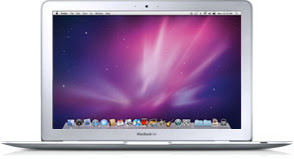
At the beginning of the year, I shed a few pounds, not from some New Year's Resolution, but from going down from a MacBook Pro to my MacBook Air. The Air is speedy, light and is the first step at moving to the cloud, almost by necessity, thanks to its 128 GB SSD disk, about half what the Pro offered. While the Air was a 2009 model, and is already out of date compared to the newest offerings from Cupertino, it is running great and goes everywhere with me.

3) Samsung Galaxy Tab

Regardless of Steve Jobs' comments, the 7 inch tablet form factor is impressive. I haven't fully written up my experience with the Galaxy Tab yet, but it brings the best of the world of Android in a design that fits simply in one hand - perfect for e-mail, photography, surfing the Web, Facebook, or reading books. It starts on the fly with full access to the Android Market, and actually fits in your jeans pocket, or inside jacket pocket. The device is actually very fast as well. It is inevitable to be compared to the iPad, which came first, and some may find it crazy to choose the Galaxy Tab over the iPad, but I've never really warmed up to the iPad, which is used much more by my kids than me. With the Air and Galaxy Tab, the iPad is essentially the odd one out.

4) Apple iPad

The iPad is going to be #1 on many different lists this year, from sales to innovation. For years, Apple was rumored to be working on a tablet device, and in 2010, it finally came, to tremendous success, just as the iMac and iPod and iPhone before it had. It replicated the iPod experience in a much larger screen, and is the go-to device for my toddlers. The sheer weight and bulk of the device made it less of a fit for me, especially when squeezed by the MacBook Air, but I'd be naive in saying the iPad didn't break open the market for tablets in a big way.


5) Samsung Epic 4G

Having caught the Android bug, and finally having found a phone network (Sprint) that didn't drop every other call (I'm looking at you, AT&T), I was excited by the great number of solid reviews of the Epic 4G, and its inclusion of a full-featured keyboard. The device runs all my Android apps, connects to all my email services in the cloud, takes great video and photos, and yes, lets me type very quickly when answering longer emails or chat sessions. The biggest major drawback I have with the Epic is its poor GPS support, which art times can be debilitating. Regardless of this, I am quite happy with the Epic.

6) Barnes and Noble NOOKColor

I recently wrote up my experience with the NOOKColor, which delivers a nice slim 7-inch Android tablet masquerading as an eReader. It's got smart integration with Barnes and Noble's book supermarket, and syncs with the NOOK app, so I can begin reading a book on one device and pick it up on a second. Added support to transfer my own music and rich media files via USB make it smarter than a dumb eReader and getting to the Web is a few clicks away. While it doesn't come with full Android Market, it has proven extensible, so I would watch this space closely.

7) Google Chrome CR-48 Notebook

Reviewing or ranking my experience with this 2010 device isn't really fair. Turns out I got it today. I have high expectations with the direction Google is taking with the ChromeOS and making our lives more cloud-centric. It's a big reason I started migrating to the Air in the first place at the beginning of the year. My initial impressions are as expected, with tight integration to the Chrome browser (essentially the full experience), a great thin frame and nice keyboard. The trackpad, pilloried by others, still needs some work. Putting a beta product on a pedestal against established innovative leaders like the MacBook Air is not fair, but I would bet that a mix of ChromeOS and Android features will lead to some interesting product pushes in 2011 and 2012 from these teams.

8) HTC Evo 4G

The Evo 4G I picked up at Google I/O this Spring was my first dive into the world of Android, and the way it performed against my aging iPhone 3G was remarkable - giving fast performance and real multitasking in a place I had never expected. The Evo's GPS and access to the Android Market made it very solid, and put me on a strong phone network for voice for the first time in years. The drawbacks to the Evo, including bulk and low battery life, mixed with the lack of a hardware keyboard had me switching to the Epic with no hard feelings.

9) Apple TV (2010 Edition)

Established Apple TV owners since the first 40 GB generation, the long-awaited development of the new Apple TV was well anticipated, and landed with a mixed experience. The machine is incredibly small and fast access to Netflix or streamed videos and TV is great, but the greatly reduced library was a disappointment. Truth be told, the best Netflix access in our home is actually with our Nintendo Wii, so the Apple TV only really gets use when we want a movie in the evening.

10) TyPad for iPad

With the launch of the iPad came the launch of iPad accessories. One of the more useful for me was the TyPad, which combined an elegant looking iPad case with a full-fledged bluetooth keyboard. If you're one to type out full e-mails on the iPad, the TyPad is very cool. The only downside is that once I had a keyboard, I found myself also reaching for a mouse or trackpad. Old habits die hard.

Christmas also brought a second NOOKColor into our home as I bought one for my wife, so now we have two iPads, two NOOKColor devices, and one Samsung Galaxy Tab, so we have 5 tablets to go with our three laptops (counting the CR-48). I am curious to see if 2011 will be as strong. But if you haven't checked out the Sonos S5, Galaxy Tab or are in the market for a new laptop, try out the Air or CR-48. Great stuff this year.