Showing posts with label social media. Show all posts
October 20, 2018
Comments as a Platform, Or Silencing the Trolls
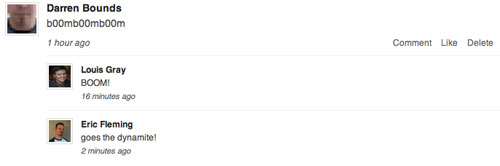
Web content has typically divided into three camps - those who create, those who react, and those who just watch. The lurkers, if you will. From the very earliest days of blogging, those first posts awaited the inevitable comments, and, given a clear revenue stream, you would see early participants like Fred Wilson say that "comments are how bloggers get paid."
[Source: https://vanelsas.wordpress.com/2008/06/02/the-real-value-of-social-media-interaction/#comment-2531]
The earliest engagements we had with people who read our site gave us incredible discussions, and spawned more posts and even, in rare cases, changed minds. Sites like Digg, Reddit, Slashdot and others became known for their diverse threads, and those in the comments are why you showed up.
But we've also seen the pendulum swing the other way. Everybody knows to "never read the comments" on popular news sites, as the most aggressive vitriol and ignorance floats to the top. YouTube comments have long been notorious for their lack of quality (though I feel this has improved of late). And Twitter, for many who should be able to use the platform, their every move can attract trolls who have a vendetta to take them down - but somehow don't get banned.
As social media sites eclipsed the momentum of blogs, conversations moved. We adapted by integrating social discussions from FriendFeed, Facebook and Twitter and appended them to our blogs. We would all share our posts on social, and then engage where the content landed. The best bloggers would find their readers wherever they were. But others simply turned comments off. Maybe it is because they were full of spam (they were) or the quality wasn't there (often true), but also, because the total quantity declined.
Let's go back to talking about Twitter. Twitter drives me nuts because it's fantastic and so poor at so many things. They seriously have real-time on lockdown. There is no better place to see what is happening right now. If there's a calamity, search Twitter. A breaking news event? Search Twitter. A sporting event? Twitter.
But Twitter has this awful habit of giving all users an equal voice. Now hear me out what I mean.
If you tweet publicly, anybody who you haven't blocked can reply, and their content is appended to your tweet. It follows you around. If a Republican politician posts, left-leaning posters race to take down their message, while the MAGA crowds prop it up and try to gain eyeballs. If the Kardashians say something, the crowds pounce on the valuable real estate quickly to show their adoration or pimp whatever link they've got going.
And down the publicity food chain, if you're a woman, especially a visible one, you get awful men saying foolish things. I guarantee it. They may call you names or question your ability. You block one and ten more pop up. If you're black, or Jewish, the racists will find you. They all know how to tweet.
So what I recommend above all other Twitter changes is the ability for people to reclaim their space. Hillary and Trump should both be able to post information without the crowd's replies being appended. Just like blogs and YouTube stars can turn comments off, Twitter users should be able to as well. The thing about social networks (and most products, to be honest) is that you should give the users control. But they haven't done it, and I think it delivers a great disservice to the platform, which has become a hotbed of harassment and hate - as Reddit and others have too.
If you can trust your commenters enough to give them a voice, by all means, amplify their voices. But when they have shown you time and again that they cannot be trusted, turn it off.
February 11, 2016
We Need Smart and Personal Streams, Not Just The Latest Updates
Once again, the tech web is aflutter about a proposed change in Twitter’s timeline — as they have finally made a choice to offer more than a simply chronological feed of updates displayed in the order they were posted. While a chronological order of tweets can be considered a hallmark definition of what Twitter is today, and truthfully, one of its most addictive features as each new Tweet rolls in, it’s also a detriment to those who aren’t ready to be constantly hooked to the information IV drip.
Twitter is 10 years old now. That’s fairly mature from a Web services standpoint. Its peers, LinkedIn and Facebook, are 14 and 12 respectively. The next generation? Pinterest is just over six. Instagram nearly six. Snapchat is five. And yet it often seems as people are still waiting for Twitter to make that big leap forward to properly sit at the adults’ table.
Twitter as a Media Network, not a Social Network
Ex Twitter PR and comms guy Sean Garrett, now running his own firm, commented yesterday that Twitter’s been done a disservice by being labeled as a social company instead of as a media network. Taking that summary seriously, it clarifies one of the major needs for a personal and intelligent ranking of content, rather than a raw feed of the latest updates. Media companies don’t just give you the very latest updates in order, with no external curation. Instead, they sort it, rank it and deliver them from the most important to least important — whether their medium is television, radio, print or online.
For the most aggressive media consumers, like myself, the idea of seeing content out of order may seem like pure heresy. We read every email, read every blog post in Feedly, and generally catch up on Twitter to the point where we left off. Scrambling that up seems abhorrent. But we’re not normal. We’re seeing that from the tippy top 1% of the bell curve, and hoping the rest of the world will catch up to us. But not only won’t they, but they don’t need to, and we should stop expecting it.
A successful network has an obligation to give its users the best possible experience and do it instantly. But surfacing the right updates for the right person at the right time is a tricky Venn diagram to figure out, be it based on the users’ topics of interest, their affection for the person posting the content, the recency of that content, and obviously, a mix of all those signals and more. Just sitting back and showing the latest stuff only solves for one of those qualities: recency — completely ignoring what I like, who I trust and so on.
Personalized Content Leads to Happier Users, More Usage
From 2009 to 2011, I worked with my6sense, first as a third party consultant, and later as the company’s VP of Marketing, before I joined Google. Their app surfaced content from your social streams in a personalized way, just for you, based on your own implicit behaviors — what you clicked on, what you chose not to, how long you read something, etc. The more you used the application, the smarter it got, and eventually, we would know your interest patterns so well, that we could take our user model and apply it to any stream on the web.
In early 2011, we delivered a Chrome extension for Twitter, which took the smarts we’d developed and displayed the results of that effort on the Twitter website — giving you two options: your standard timeline, ordered chronologically, and a smart, personalized timeline, from my6sense.
By no means were we the first company to try and bring sense to a social stream. In fact, in 2008, FriendFeed (RIP) offered users personalized recommendations as a feature to their service, aimed for those who’d been away and wanted to quickly catch up. But one aspect important to both of these examples is that they gave the user a choice. You could quickly switch between a chronological feed, which was the default, and the smart feed, personalized to your interests. You could always go back.
But as we found out, the more the user visited the app, and the more accurately we could determine their preferences (which we called digital intuition), the less likely they were to ever visit the unfiltered, unsorted feed. If you became accustomed to a curated feed tailored just for you, going back to one that wasn’t seemed unacceptable in comparison.
Quantity Isn’t Quality. Popular Isn’t Personal.
So imagine you’re one of the millions of users of Twitter (or Facebook, etc.) who doesn’t check in every day. On the rare occasion you do visit, you’re not seeing a feed of updates from people who matter to you most. You’re instead seeing a feed of updates from people who post the most. And quantity rarely was quality. When your selling action to those most likely to leave your service is to give them something low quality and off topic, that’s a problem. And yet, for many services, that’s the default.
Going even further, what many services provide as an option is a leaderboard of popular or “Top” content. It’s assumed the most engaged content is the “best”, but this alone is far from the truth. If you seek out a stream for intellectual curiosity and news, you won’t get that from viral videos and memes, jokes and celebrity news. But many people go to these services to turn their minds off or to relax, and their goal may be in direct contradiction with yours.
Twitter’s Success Really Isn’t the Topic of Debate
Now that Twitter has gone public and its financial success is being graded quarter by quarter, and Wall Street’s public vote on their valuation is there for the world to see, its success could be easily measured solely by stock price. Amid the hubbub of whether Twitter could sustain a billion person audience, like Facebook, or if it’s exceptionally valuable due to the role it plays in the world’s news dissemination and communication, the reality is that it has to do better both for its current user base and those yet to embrace it. And that requires change and evolution.
Twitter should be personal just for me. So should Facebook. And LinkedIn. And the web at large. And my phone and car and so on. If a dichotomy is set up between something that’s smart and personal against one that isn’t, I know I’m going to give the service a chance to give me a better experience — and if not, I should always be able to go back.
Disclosures: I work at Google, a partner and occasional competitor to Twitter. I’ve been an active Twitter user for eight-plus years. I was previously VP of Marketing at my6sense, which built a personalization engine.
March 09, 2015
FriendFeed's Closure Another Painful Loss from a Vibrant Era of Social Media
Amidst all the Apple watch hoopla today, FriendFeed's blog announced the long-ignored social networking pioneer was finally going to be taken out back behind Facebook's brilliant new campus and be put down for good. With the network's acquisition five years behind us in the rear view mirror, and user statistics consistently down, mothballing the once unique and vibrant community seemed only a matter of time, and the time has come.
The closure will be by no means without pain. For the many people who made the site their center for capturing their updates around the Web, from the simplest status and debates to photos, there have been no hints at data migration or export. The hilarious threads with friends around the world are going to disappear. The instantaneous celebrations we had when my children were born, and the despair we felt when friends passed away and were mourned will be deleted.
While the Web may have moved on, those of us most loyal to the service remember its pioneering excellence, with near-instant aggregation and publishing, near-perfect uptime, still completely unmatched advanced search capabilities, the introduction of the now universal Like button, topical "Rooms" much like the Groups or Communities of today's networks, and ability to act as a hub for your lifestream, sending the right updates to the right places immediately.
Facebook's 2009 announcement of acquiring FriendFeed clearly spelled good news for the small and elite team working at the company, but pretty much spelled bad news for those who preferred it to what have clearly been the eventual winners in Facebook and Twitter. Some elements of FriendFeed made their way into Facebook, but there really hasn't been anything like it since. (Google Buzz came close, but that's a different story)
The Social Web's picture in 2008 and 2009 was dramatically different than it is today. Twitter was as known for its uptime issues as for its core functionality. Facebook was obviously on a fast ramp to going public, Google Reader was the starting point for reading the Web's updates via RSS, and we were all looking for smart aggregation sites to discuss the Web's happenings with friends.
Flash forward, and Google Reader (RIP) and FriendFeed are in the bin, aggregation is no longer a thing, and the hottest discussions are around good looking filter apps or private networks with disappearing content. It makes one feel a little gutted to have invested in networks that felt a little bit smarter and were designed for smart consumption and discussion, rather than a flight toward the lowest common denominator.
Any ranting on my part to rescue my photos and posts and content from FriendFeed is a guaranteed moot point, and will fall on deaf ears, no doubt. While Google led the way with the Data Liberation project, and even Facebook and Twitter have archives you can download and take with you, FriendFeed has never made that step, and I'd be stunned if they would surprise us now. And while we're saying goodbye to conversations that used to spawn hundreds of comments and likes in the matter of minutes, it's almost as if we should feel lucky we squeezed out a few more years of engagement after the acquisition, when so many other products disappear immediately after getting bought.
Sigh.
If you were part of the active community that made FriendFeed special in those wide-eyed years, you experienced something I've never seen with any community since (with occasional flashes on Google+ and Twitter being exceptions). If you missed it, then you missed out on seeing one of the most talented teams ever assembled working on something that was both fun and smart. And that story's final chapter is coming without us ever getting the happy ending we were hoping for. I'm not mad, just wistful at what might have been.
Long live FriendFeed.
The closure will be by no means without pain. For the many people who made the site their center for capturing their updates around the Web, from the simplest status and debates to photos, there have been no hints at data migration or export. The hilarious threads with friends around the world are going to disappear. The instantaneous celebrations we had when my children were born, and the despair we felt when friends passed away and were mourned will be deleted.
While the Web may have moved on, those of us most loyal to the service remember its pioneering excellence, with near-instant aggregation and publishing, near-perfect uptime, still completely unmatched advanced search capabilities, the introduction of the now universal Like button, topical "Rooms" much like the Groups or Communities of today's networks, and ability to act as a hub for your lifestream, sending the right updates to the right places immediately.
Facebook's 2009 announcement of acquiring FriendFeed clearly spelled good news for the small and elite team working at the company, but pretty much spelled bad news for those who preferred it to what have clearly been the eventual winners in Facebook and Twitter. Some elements of FriendFeed made their way into Facebook, but there really hasn't been anything like it since. (Google Buzz came close, but that's a different story)
Flash forward, and Google Reader (RIP) and FriendFeed are in the bin, aggregation is no longer a thing, and the hottest discussions are around good looking filter apps or private networks with disappearing content. It makes one feel a little gutted to have invested in networks that felt a little bit smarter and were designed for smart consumption and discussion, rather than a flight toward the lowest common denominator.
Any ranting on my part to rescue my photos and posts and content from FriendFeed is a guaranteed moot point, and will fall on deaf ears, no doubt. While Google led the way with the Data Liberation project, and even Facebook and Twitter have archives you can download and take with you, FriendFeed has never made that step, and I'd be stunned if they would surprise us now. And while we're saying goodbye to conversations that used to spawn hundreds of comments and likes in the matter of minutes, it's almost as if we should feel lucky we squeezed out a few more years of engagement after the acquisition, when so many other products disappear immediately after getting bought.
Sigh.
If you were part of the active community that made FriendFeed special in those wide-eyed years, you experienced something I've never seen with any community since (with occasional flashes on Google+ and Twitter being exceptions). If you missed it, then you missed out on seeing one of the most talented teams ever assembled working on something that was both fun and smart. And that story's final chapter is coming without us ever getting the happy ending we were hoping for. I'm not mad, just wistful at what might have been.
Long live FriendFeed.
February 11, 2014
If You Took a Photo, You're Sharing it, Right?
Back in the olden days, or at least to the 1980s, proud parents would take photos of their family, have the film developed at a photo lab, and then take the hard copies of these photos home. Some of the photos would be placed in keepsake books. Others would be framed. But you pretty much had to be in the same physical location as the person holding the photo. They brought the photos to you, and you looked at them, lovingly, or at least passively, for a moment, before handing them back or to the next relative down the line.
Entire histories of lives come and gone are frozen in these physical collections - to be viewed irregularly, as memories are shared with nostalgia. But in the last two decades, our ability to take an exponentially increasing amount of photos, more quickly, in higher quality, and share them instantly practically anywhere, has turned the notion of scarcity on its head. Now anybody, should you choose, can see any photo you've ever taken, on any number of social outlets of your choice - whether you're using a phone or a more professional camera, or even +Google Glass.
With these barriers out of your way, with everyone having this seemingly infinite capability to capture practically every moment, you're also seeing people's intent for distribution change not for nostalgia to the past, but for a time sharing window of minutes or days. Photos are no longer looked back on as bits of the past that one happened, but in many cases, a lens (so to speak) into a shared present. Here's what I'm doing right now. Here's an experience I just had that you need to know about and engage with... right now.
Entire histories of lives come and gone are frozen in these physical collections - to be viewed irregularly, as memories are shared with nostalgia. But in the last two decades, our ability to take an exponentially increasing amount of photos, more quickly, in higher quality, and share them instantly practically anywhere, has turned the notion of scarcity on its head. Now anybody, should you choose, can see any photo you've ever taken, on any number of social outlets of your choice - whether you're using a phone or a more professional camera, or even +Google Glass.
With these barriers out of your way, with everyone having this seemingly infinite capability to capture practically every moment, you're also seeing people's intent for distribution change not for nostalgia to the past, but for a time sharing window of minutes or days. Photos are no longer looked back on as bits of the past that one happened, but in many cases, a lens (so to speak) into a shared present. Here's what I'm doing right now. Here's an experience I just had that you need to know about and engage with... right now.
I took all of these photos, but only shared some.
So as a parent, as I take photos at home or out on our trips, and see others with their various cameras and smartphones taking images in, I'm not thinking of these hardbound photo books that get passed to future generations, or even in most cases, online photo book equivalents like +SmugMug or +Shutterfly, but instead to ephemeral destinations in the stream, be it Facebook, Instagram, Google+ or Twitter. And the target audience has changed as well. The photos you're taking of your kids and friends aren't always for them to have a shared memory of what you did together, but instead for you to update other friends, other colleagues, and often strangers, to the experience you're having.
If I didn't share it, did it happen?
The more professional photographer may take hundreds or even thousands of photos on an adventure. They'll painstakingly go through each shot and find the very best ones that were captured with the optimal setup and lighting. Then, after much editing, they'll share a select few - a best of the best, to an audience who has come to expect a high level of quality from them. But for the rest of us, usually the best we'll do is pick our favorite few and lob them to the nearest social networks where our friends and family will see it. Or worse, we'll just delete the ones that make us look bad, and post the entire glob of photos as a collection - a digital slide show that hopes our friends will care enough to find their favorite, and leave us a comment, Like or +1 in return to give a head nod of agreement.
Now that my kids are entering their sixth year of life, and are on the home stretch of kindergarten, I've captured my unfair share of thousands of photos - some good, some bad. I've backed them all up to +Google Drive so I can get to all my photos on all my +Android and ChromeOS devices - or any device with an Internet connection, really. With online storage space becoming cheaper and the ease of posting getting down to almost zero, there's nothing stopping me from taking more photos. And the more smartphones and wearables we get with cameras, the more we can be constant amateur shutterbugs.
And think forward a bit - away from today's streams. As technology advances forward, the way we share changes. We've moved from slide carousels of vacations and Walgreen's photo labs to online photo book replicas, and in-stream editing. We're not backing up our photos to CDs and DVDs, and I don't see a future where I'll hand my kids a microscopic Flash drive upon graduation. They'll just know. Any photo that's ever been taken that I want them to have will be available - and I shouldn't have to do anything. We've eliminated the physical barriers that dictated how we share. Even more, these virtual walls are coming down. In the mean time, I bet when you take that photo, you're thinking where you're going to share it.
September 24, 2013
Two Paragraphs, a Link, and a Cloud of Dust
Our platforms, and their limitations, are changing the way we communicate. Rather than accommodating the many ways we as humans like to share and engage with others, most of the online services we use have limits in how much we can share, how items can be staged, and how easily others can discover or respond.
While Twitter's 140 character platform is only the most well-known of these hard limits, there is an easily observable trend away from long-form content, analysis and conversation, and more toward a brief moment with an ephemeral interaction. Blogs are one of the last outlets we have where the container, like liquid, expands to contain all into it which is poured, while most other outlets are often trying to make us something we're not - be it photographers, clever headline writers or meme artists.
We've moved away from thousand-plus word screeds and dozens of debatable comments over a single item, with a permalink discoverable through search, instead to a moment in a stream that is significantly less relevant tomorrow or next week than it is today. We're valuing our content not in real activity, but in microactivities - be it +1s, Likes, Retweets or Favorites. We're trading points and counterpoints for vague notions of follower counts and popularity.
While it can be a challenge to regularly upkeep an outlet like a blog or a news magazine, consider the permanence and discoverability of this content. One can, with a little effort, read an author's life as it changes, by poring through the archives. Authors can link to previous points and positions to make a deeper case for an idea, and show consistency or evolution of thought. And permalinks can serve as the point of engagement for us to talk something into the ground, or its natural conclusion - whatever comes first.
Consider, if you would, the last really important Tweet or Facebook post or LinkedIn update that you either made or saw. Where would that Tweet stand in the halls of history? While real-time is an amazing tool for the right now, it's not usually a great tool for the later or forever. There's no other solution out there for diving into the world's collective thoughts around television, sports and shared experiences, but it lacks for completeness.
Yet that's where practically all our effort is going.
The most visible entrants and quickly adopted mediums in the social sphere over the last few years are not centered around long-form content. Instagram, for the most part, is a photo sharing site with social interaction. Tumblr, despite the option for longer-form content, is usually a collection of photos or short excerpts -- links to links with the content on the other side. WhatsApp and Snapchat are different beasts altogether, focused on the right now, with the content never intended to have any true longevity.
So our thoughts and our communications are being forced into these neatly approved buckets, wrapping around the presentation of the medium. If you know your network looks best with a headline, a few hashtags, and a sentence, that's all you'll do. If you know it's a beautiful photo with three words at the top, that's what you'll do. Maybe you can make an infographic or a meme out of it and be the most shared image of the moment, only to fade into oblivion the next day.
That's why I'm optimistic about the plans for Ev Williams' work on Medium, as outlined in a dedicated piece for TechCrunch two weeks ago. We've also seen interesting attempts from Dustin Curtis' Svbtle network - a very well designed platform with hand-selected authors. I don't yet have accounts with either, as I'm quite loyal to my +Blogger platform and integrated Google+ comments, but both services seem to be fighting against the stream, so to speak, helping people with longer thoughts share in a better looking way.
I believe as social participants, we can and should do better than a picture with a few words, a tweet that summarizes a link, or a post with a headline and a paragraph. It may satisfy the right now, short attention span theater, but if that's all we have, then what do we tell history that we've done? Do we suggest that those in the future looking back on this age download our archived social stream to best understand who we were? Should they grok our automatically filtered photos and understand our taste for art, or see how many likes a post got to determine its impact?
I would hope we're not letting the containers impact our ability to share the entirety of the message. That's why even while I've got plenty of other work to do, the blog continues to be my foundation in a world of streams, which I first wrote more than four years ago and stand by. So if your favorite social outlet starts to reduce the number of ways you can express yourself, take it somewhere else. Don't cut yourself short, and become dust in the wind.
Usual boring disclosures: I work at Google on Developer Relations. Most of my work is on YouTube videos, short and long. This blog runs on Blogger and integrates Google+ comments. The post is not intended as a post in favor of or against our products or competitors' products. I also like writing long disclosures.
While Twitter's 140 character platform is only the most well-known of these hard limits, there is an easily observable trend away from long-form content, analysis and conversation, and more toward a brief moment with an ephemeral interaction. Blogs are one of the last outlets we have where the container, like liquid, expands to contain all into it which is poured, while most other outlets are often trying to make us something we're not - be it photographers, clever headline writers or meme artists.
We've moved away from thousand-plus word screeds and dozens of debatable comments over a single item, with a permalink discoverable through search, instead to a moment in a stream that is significantly less relevant tomorrow or next week than it is today. We're valuing our content not in real activity, but in microactivities - be it +1s, Likes, Retweets or Favorites. We're trading points and counterpoints for vague notions of follower counts and popularity.
While it can be a challenge to regularly upkeep an outlet like a blog or a news magazine, consider the permanence and discoverability of this content. One can, with a little effort, read an author's life as it changes, by poring through the archives. Authors can link to previous points and positions to make a deeper case for an idea, and show consistency or evolution of thought. And permalinks can serve as the point of engagement for us to talk something into the ground, or its natural conclusion - whatever comes first.
Consider, if you would, the last really important Tweet or Facebook post or LinkedIn update that you either made or saw. Where would that Tweet stand in the halls of history? While real-time is an amazing tool for the right now, it's not usually a great tool for the later or forever. There's no other solution out there for diving into the world's collective thoughts around television, sports and shared experiences, but it lacks for completeness.
Yet that's where practically all our effort is going.
The most visible entrants and quickly adopted mediums in the social sphere over the last few years are not centered around long-form content. Instagram, for the most part, is a photo sharing site with social interaction. Tumblr, despite the option for longer-form content, is usually a collection of photos or short excerpts -- links to links with the content on the other side. WhatsApp and Snapchat are different beasts altogether, focused on the right now, with the content never intended to have any true longevity.
That's why I'm optimistic about the plans for Ev Williams' work on Medium, as outlined in a dedicated piece for TechCrunch two weeks ago. We've also seen interesting attempts from Dustin Curtis' Svbtle network - a very well designed platform with hand-selected authors. I don't yet have accounts with either, as I'm quite loyal to my +Blogger platform and integrated Google+ comments, but both services seem to be fighting against the stream, so to speak, helping people with longer thoughts share in a better looking way.
I believe as social participants, we can and should do better than a picture with a few words, a tweet that summarizes a link, or a post with a headline and a paragraph. It may satisfy the right now, short attention span theater, but if that's all we have, then what do we tell history that we've done? Do we suggest that those in the future looking back on this age download our archived social stream to best understand who we were? Should they grok our automatically filtered photos and understand our taste for art, or see how many likes a post got to determine its impact?
I would hope we're not letting the containers impact our ability to share the entirety of the message. That's why even while I've got plenty of other work to do, the blog continues to be my foundation in a world of streams, which I first wrote more than four years ago and stand by. So if your favorite social outlet starts to reduce the number of ways you can express yourself, take it somewhere else. Don't cut yourself short, and become dust in the wind.
Usual boring disclosures: I work at Google on Developer Relations. Most of my work is on YouTube videos, short and long. This blog runs on Blogger and integrates Google+ comments. The post is not intended as a post in favor of or against our products or competitors' products. I also like writing long disclosures.
April 08, 2013
Video: Social Media: The Thing You Do "Between" Things
A couple weeks ago, I got the chance to visit Paris, France and London, in the UK, to speak at Devoxx France and meet with colleagues internationally. While in London, I sat down with +Bob Barker, who works with my good friend +Thomas Power, and he asked me questions on how I use social media, including what sites, what times, and for what purpose.
As this question comes up a lot, and continues to come up, more than 7 years after I started the blog, I'm glad he took the time to record it in this video, less than ten minutes long. Fast summary: You shouldn't block off time in your day for social media. Like email or catching up on the news, social media happens "between" the rest of the bits in your life - be they meetings, work, or anything else.
Like many people, I consume content differently on a mobile device than I do on the desktop. I often watch television, but at the same time, have my Nexus 7 so I don't miss a thing - levering what I've long called continuous parallel attention. In the discussion, we talk about how Google+ Hangouts have broken down barriers in communicating with friends, family and colleagues, and how I leverage Twitter for real time content and sports. Of course, I work for Google, but these are my individual words, and the objective was to be as transparent and real as possible.
As this question comes up a lot, and continues to come up, more than 7 years after I started the blog, I'm glad he took the time to record it in this video, less than ten minutes long. Fast summary: You shouldn't block off time in your day for social media. Like email or catching up on the news, social media happens "between" the rest of the bits in your life - be they meetings, work, or anything else.
Like many people, I consume content differently on a mobile device than I do on the desktop. I often watch television, but at the same time, have my Nexus 7 so I don't miss a thing - levering what I've long called continuous parallel attention. In the discussion, we talk about how Google+ Hangouts have broken down barriers in communicating with friends, family and colleagues, and how I leverage Twitter for real time content and sports. Of course, I work for Google, but these are my individual words, and the objective was to be as transparent and real as possible.
July 05, 2012
Real Valley Stories: Leveraging Assets to Get One's Way
Editor's Note: Part 7 in an irregular series of stories from my 13 years in Silicon Valley. Part 6 talked about the a trade show booth nightmare. This time, an example of how you can leverage opportunity to achieve a goal.
Practically every employee has had a point in their career when they have run into friction with management on ideas or strategy. How you deal with this conflict, explain your ideas, and try to convince those who aren't yet sold can have a big impact on what gets implemented and how you are perceived by your colleagues. Hold to your guns too strongly, as I almost did back in 2000 over URL structure, and you could be out of a job. Become too passive, and it's unlikely you'll do much besides become a wallflower.
In the 2006-07 timeframe, about when I started posting on this blog regularly, I was sure of the impact social media and blogging would have on the way customers interacted with each other and brands. But while I was blogging in the evening hours on strategy and playing the part myself, during the daytime hours at the office, I was struggling to get my management team to go along, no matter the examples I brought up, the guidance from our current PR team, or the links I found on the web.
As sure as I had been in 2003-04 that leveraging Google Adwords ahead of the competition would give us increased visibility to customers, buying keywords for our industry, I was sure that we once again had the opportunity to be leaders in what was a fairly slow moving market. But my boss, the VP of Marketing, said my time would be better used doing a demand gen campaign than writing a blog. When the PR team and I appealed to the CEO, and asked him what blogs he read, he drew a blank, looked up, and said "those Louis sends me." Aside from being frustrated at what I perceived to be a lack of intellectual curiosity, I felt like a fraud - unable to get my company to do what I was telling others they should. My Clark Kent and Superman cape was showing holes.
But opportunity struck, surprisingly, when I was asked to solicit additional public relations firms, as we ramped up for what would be our first approach at entering the public markets and filing an IPO. The main reasoning for taking on an elite firm was that we wanted one to assist with not just the standard marketing and PR, but also analyst relations and investor relations.
While that in itself was a lot to do, I tagged on more. In creating my requests for proposal (RFPs), I made it mandatory that any firm bidding also had to propose a thorough social media and blogging strategy. In phone calls with each of the firms I reached out to, I made it clear that this was mandatory - and I would not consider anyone who did not lead with a comprehensive strategy that explicitly suggested I lead the company's blogging effort. Everyone, no doubt wanting to win the contract, agreed.
In the next few weeks, firm after firm came through our doors, telling us about their PR, AR and IR acumen, their industry expertise, and one after one said that our company should initiate a deep social media strategy, including blogging, and each one told our VP and CEO that I should lead it. After hearing this three or four times, my boss turned to me, and smiling, said, "What the hell? Did you tell them all to say this?" I played dumb, but eventually they wore down, and social media and blogging, including activity on Twitter, Facebook, Google Reader shared links and FriendFeed was part of our standard activity - at a time when larger competitors were still figuring things out.
I'd like to say the story ended up with roses. We ended up filing the IPO and later withdrawing it, and the quiet period disrupted some of our ability to be more active. Later, after I left the company in 2009, they filed again, before being acquired last year. But for me, it was good to see I could leverage the assets I had to achieve what I wanted, even when seeing executive debate. You don't always get a chance to get an external team to preach your ideas to your management, but if you do find the opportunity for leverage, it can't hurt to give it your best shot.
In the 2006-07 timeframe, about when I started posting on this blog regularly, I was sure of the impact social media and blogging would have on the way customers interacted with each other and brands. But while I was blogging in the evening hours on strategy and playing the part myself, during the daytime hours at the office, I was struggling to get my management team to go along, no matter the examples I brought up, the guidance from our current PR team, or the links I found on the web.
As sure as I had been in 2003-04 that leveraging Google Adwords ahead of the competition would give us increased visibility to customers, buying keywords for our industry, I was sure that we once again had the opportunity to be leaders in what was a fairly slow moving market. But my boss, the VP of Marketing, said my time would be better used doing a demand gen campaign than writing a blog. When the PR team and I appealed to the CEO, and asked him what blogs he read, he drew a blank, looked up, and said "those Louis sends me." Aside from being frustrated at what I perceived to be a lack of intellectual curiosity, I felt like a fraud - unable to get my company to do what I was telling others they should. My Clark Kent and Superman cape was showing holes.
But opportunity struck, surprisingly, when I was asked to solicit additional public relations firms, as we ramped up for what would be our first approach at entering the public markets and filing an IPO. The main reasoning for taking on an elite firm was that we wanted one to assist with not just the standard marketing and PR, but also analyst relations and investor relations.
While that in itself was a lot to do, I tagged on more. In creating my requests for proposal (RFPs), I made it mandatory that any firm bidding also had to propose a thorough social media and blogging strategy. In phone calls with each of the firms I reached out to, I made it clear that this was mandatory - and I would not consider anyone who did not lead with a comprehensive strategy that explicitly suggested I lead the company's blogging effort. Everyone, no doubt wanting to win the contract, agreed.
In the next few weeks, firm after firm came through our doors, telling us about their PR, AR and IR acumen, their industry expertise, and one after one said that our company should initiate a deep social media strategy, including blogging, and each one told our VP and CEO that I should lead it. After hearing this three or four times, my boss turned to me, and smiling, said, "What the hell? Did you tell them all to say this?" I played dumb, but eventually they wore down, and social media and blogging, including activity on Twitter, Facebook, Google Reader shared links and FriendFeed was part of our standard activity - at a time when larger competitors were still figuring things out.
I'd like to say the story ended up with roses. We ended up filing the IPO and later withdrawing it, and the quiet period disrupted some of our ability to be more active. Later, after I left the company in 2009, they filed again, before being acquired last year. But for me, it was good to see I could leverage the assets I had to achieve what I wanted, even when seeing executive debate. You don't always get a chance to get an external team to preach your ideas to your management, but if you do find the opportunity for leverage, it can't hurt to give it your best shot.
March 30, 2012
Writing for Social, Defending for Court
Earlier this month, I had an interesting experience, being asked to participate in a deposition, taking questions from a legal team as part of an ongoing case. While I’ll skip the details out of deference for confidentiality, there were aspects of the morning that serve as a reminder for those of us who participate online that often, content we post is permanent, and it can be discovered and used for means far beyond those we originally intended.
For those unfamiliar with the process of a deposition, it’s essentially when an individual is called as part of a fact-finding mission, to bring information deemed relevant to a lawsuit or other legal matter, outside of court. The individual being deposed, in this case, me, fields questions from an attorney, and those answers are recorded as on the record, as they would be in court. The questions can draw from one’s memory and experience, or can come in response to exhibits entered into evidence.
In my example, beyond questions about my knowledge and experience, I was presented with four exhibits entered into evidence. As is procedure, I was first asked if I recognized the exhibits, and after acknowledging I was familiar, I fielded questions about their content. The source of these exhibits was intriguing, consisting of:
1. The main documents related to the case, as one would expect.
2. My own LinkedIn resume.
3. A Google+ post I made in 2011.
4. Multiple Quora posts I made in 2010 on a single topic.
Seeing my own words come back to me, in a new and unexpected setting, was initially unnerving. No doubt when I set up my LinkedIn resume and ongoing work history, I didn’t anticipate it forming the background for how I would be qualified in the legal process. When I posted to Google+ last year, I didn’t anticipate mining a few of the paragraphs to confirm what I had stated was accurate. I certainly didn’t expect posts I made on Quora two years ago would later be entered into the legal record.
As I revisited my own words, I was comforted to see they were not only accurate, but mirrored my testimony and helped answer the questions. I was intrigued to see the mix of content coming from LinkedIn, Google+ and Quora as forming the exhibit summary for the case, and glad that my honest and direct approach to social networking meant I didn’t have to explain away any hyperbole, sarcasm or misdirection.
The morning’s events wrapped and I was left thinking about the mountain of content I’ve brought to various social networking sites in the last several years - from the blog to Twitter, Facebook, Google+, LinkedIn, Quora and so many other places, as well as the activity many of my peers are consistently producing. We’ve all heard stories about how posting pictures from a party or slandering your boss online can have real world impact. But as social networking content becomes the grounds for evidence in law, it brings up new considerations for seriousness on the web.
As one friend of mine, who has also gone through the deposition process before, noted when I replayed the events, “People who work for a large company, yet insist on saying crazy things, probably haven't been through a deposition already.” I would have to agree. That doesn’t mean lose your sense of humor and personality, but it does mean that if you do participate online, consider where the words could eventually fall. You might be surprised.
December 22, 2011
Social Networking With Strangers
There’s a well-known saying attributed to the poet and playwright William Butler Yeats: “There are no strangers here; Only friends you haven't yet met.”
As social networking has evolved to encompass a significant amount of people’s time on the Internet, divergent approaches to friending and following, sharing publicly and sharing selectively have emerged. Some networks have a solely synchronous relationship, where the bond can be broken unilaterally by either individual, but must be initiated by one and accepted by another, while others are asynchronous, meaning one can follow the content you make available publicly, even if you don’t explicitly pass approval.
The two best-known social networks that primarily rely on a synchronous relationship are Facebook and LinkedIn, preceded by sites like Friendster and MySpace. In September, Facebook introduced a “Subscribe” feature, which is asynchronous, but to be counted as “friend”, the connection must be mutual. LinkedIn connections are also mutual.
Other services, including, most notably, Twitter, but also FriendFeed and Google+, have used asynchronous relationships. For Twitter and FriendFeed, anybody who ran into your content, whether following you directly, or discovering it through search or friend recommendations, could respond to it via a Like, a Retweet, a Comment or Share. The same is true for public posts on Google+, while sharing to limited circles on Google+ reduces the visibility to those you have explicitly selected.
That people you don’t explicitly know or have a mutual relationship with can engage on your content can be a surprise, or even unnerving, to some users. While Twitter has seen user following numbers vault into the tens of thousands or even millions for some celebrities, not all have embraced the interest of being followed by the masses, who are often simply people interested in you or your content, not necessarily bad actors. Not blurring the lines of a “friend”, Twitter calls them “followers”, while FriendFeed calls these people “subscribers”, relating a connection between the individual and your content, not necessarily you.
Those used to an asynchronous model are used to connections with strangers, while others used to a synchronous model are often quite verbal about what is perceived as an onrush of random connections. As Google+ has been in the market for about six months, many users have been quite surprised at the high number of people who have them in circles, and I’ve seen some say they block those they don’t know. But as someone who has engaged in both models, the value comes from learning who sees your content, and what that means - especially on a network like Google+, where you can fine tune what content reaches which people.
For me, the overwhelming majority of people I interact with on social networks are people I met first through the web. I have made tremendous real-life friendships that started out as an online only relationship to start, through reading one another’s blogs, leaving comments, following people on Twitter and Google Reader, or any other myriad of places. Many of the colleagues I have now at Google are people who I knew years prior through FriendFeed, Twitter and their blogs, helping me continue the conversation when we finally met, rather than starting cold.
Not all online relationships turn into real life relationships later, of course, and not everything you share should reach everyone, particularly people you don’t know well.
On Twitter, if someone follows you, and your feed is public, your content is shared with them. The exception is when you may be doing @replies to a person they don’t follow as well. It makes sense to share on Twitter what you assume all your followers would see.
On Facebook, your publicly shared content is available to your friends and those who are subscribers to your public content. To share more selectively, choose one of the lists you have created. Strangers who follow you should not have access to this content, so you are at lower risk of oversharing if you use lists.
On Google+, your publicly shared content is available to all people who have you in circles, anyone who browses your profile or anyone who has a direct link to your content. To share your content without reaching strangers, you have multiple options, including sharing to any individual, any circle, to all your circles, or even extended circles, which reaches all those people you follow and those they follow. You can share as widely or as thinly as you like, and keep your content safe.
The goal is to share the right content with the right people. As people who you may not know add you, they are opting in to your public content, and nothing more. They don’t get any additional access to your contact information, photos or shares, and like Facebook and FriendFeed, you can moderate any comments in your stream, to remove spam or other unwanted feedback.
There’s no downside to new people asking to have access to your public shares, even if you don’t know them yet - and you just might be surprised about the relationships you build in the future. The requirement on your end, on any service, and trust me, I’ve tried just about all of them, is knowing what you are sharing and with whom. It’s our job, and those of other products on the web, to make this simple and easy.
You can connect with me on Google+ by going to http://www.louisplus.com. Howdy, stranger.
As social networking has evolved to encompass a significant amount of people’s time on the Internet, divergent approaches to friending and following, sharing publicly and sharing selectively have emerged. Some networks have a solely synchronous relationship, where the bond can be broken unilaterally by either individual, but must be initiated by one and accepted by another, while others are asynchronous, meaning one can follow the content you make available publicly, even if you don’t explicitly pass approval.
The two best-known social networks that primarily rely on a synchronous relationship are Facebook and LinkedIn, preceded by sites like Friendster and MySpace. In September, Facebook introduced a “Subscribe” feature, which is asynchronous, but to be counted as “friend”, the connection must be mutual. LinkedIn connections are also mutual.
Other services, including, most notably, Twitter, but also FriendFeed and Google+, have used asynchronous relationships. For Twitter and FriendFeed, anybody who ran into your content, whether following you directly, or discovering it through search or friend recommendations, could respond to it via a Like, a Retweet, a Comment or Share. The same is true for public posts on Google+, while sharing to limited circles on Google+ reduces the visibility to those you have explicitly selected.
(Disclosure of course: I am on the Product Marketing team at Google+, and joined in August. Comments I make about the service and other social products are done with the best of intentions to be fully accurate.)
That people you don’t explicitly know or have a mutual relationship with can engage on your content can be a surprise, or even unnerving, to some users. While Twitter has seen user following numbers vault into the tens of thousands or even millions for some celebrities, not all have embraced the interest of being followed by the masses, who are often simply people interested in you or your content, not necessarily bad actors. Not blurring the lines of a “friend”, Twitter calls them “followers”, while FriendFeed calls these people “subscribers”, relating a connection between the individual and your content, not necessarily you.
Those used to an asynchronous model are used to connections with strangers, while others used to a synchronous model are often quite verbal about what is perceived as an onrush of random connections. As Google+ has been in the market for about six months, many users have been quite surprised at the high number of people who have them in circles, and I’ve seen some say they block those they don’t know. But as someone who has engaged in both models, the value comes from learning who sees your content, and what that means - especially on a network like Google+, where you can fine tune what content reaches which people.
Who Are These People Following Me? (via SocialStatistics)
For me, the overwhelming majority of people I interact with on social networks are people I met first through the web. I have made tremendous real-life friendships that started out as an online only relationship to start, through reading one another’s blogs, leaving comments, following people on Twitter and Google Reader, or any other myriad of places. Many of the colleagues I have now at Google are people who I knew years prior through FriendFeed, Twitter and their blogs, helping me continue the conversation when we finally met, rather than starting cold.
Not all online relationships turn into real life relationships later, of course, and not everything you share should reach everyone, particularly people you don’t know well.
On Twitter, if someone follows you, and your feed is public, your content is shared with them. The exception is when you may be doing @replies to a person they don’t follow as well. It makes sense to share on Twitter what you assume all your followers would see.
On Facebook, your publicly shared content is available to your friends and those who are subscribers to your public content. To share more selectively, choose one of the lists you have created. Strangers who follow you should not have access to this content, so you are at lower risk of oversharing if you use lists.
On Google+, your publicly shared content is available to all people who have you in circles, anyone who browses your profile or anyone who has a direct link to your content. To share your content without reaching strangers, you have multiple options, including sharing to any individual, any circle, to all your circles, or even extended circles, which reaches all those people you follow and those they follow. You can share as widely or as thinly as you like, and keep your content safe.
The goal is to share the right content with the right people. As people who you may not know add you, they are opting in to your public content, and nothing more. They don’t get any additional access to your contact information, photos or shares, and like Facebook and FriendFeed, you can moderate any comments in your stream, to remove spam or other unwanted feedback.
There’s no downside to new people asking to have access to your public shares, even if you don’t know them yet - and you just might be surprised about the relationships you build in the future. The requirement on your end, on any service, and trust me, I’ve tried just about all of them, is knowing what you are sharing and with whom. It’s our job, and those of other products on the web, to make this simple and easy.
You can connect with me on Google+ by going to http://www.louisplus.com. Howdy, stranger.
July 26, 2011
Podcast: Social Media, Athletes, Twitter and Google+
As I mentioned on the podcast, athletes are not the fastest adopters, but if history repeats, they may follow the Hollywood celebrities to the network, and find value in limited distribution of content via Circles, dedicated Hangouts with family, fans or press, and unlike Twitter, the option to not only post in long form, but to edit content after it has been posted. Until Google+ is open to mass registration, I would expect uptake from athletes looking to use the medium for marketing to be slow, but once the doors open, it could be a very different story. Per usual, I had some audio difficulties on the call, so if you don't mind skipping through occasional static, you might enjoy our discussion, embedded below.
July 11, 2011
Warning! Social Networks Are Made Out of People!
Having lived through the rise and fall of FriendFeed, the slow rise and then rapid quickening of Twitter, and the "not quite right for this world" debut and subsequent dismissal of Buzz, I practically feel like a grizzled old social networking veteran. (But don't say expert, for that meets with an icy stare of doom) Now that the digerati and their extended circles are finding their way to Google+ and poking the system for cracks, learning what works and what doesn't, and counting each others' numbers, we're in reruns over people deciding what activity should or should not be permissible. And once again, the tools are always there to help the user deal with something that isn't a perfect match for their interests.
As you know, my bias is toward systems having the capability to learn my interests, and show me what I want to see, while avoiding that which I don't. It's what my6sense is all about, and why I've tried my unfair share of personalization tools. But barring these systems, people need to understand that you just might find content that isn't what you're looking for, and you should just keep going - even in new-fangled systems like Google+, where circling people according to the content they share, or the content you want to share them, is a major defining feature.
As mentioned last week in my serious but slightly tongue in cheek guide to "giving good social", you should both "Prove You're a Human" while also "Learning the Community" (points 6 and 7 for those keeping track). This is something I experienced early on with FriendFeed, in 2008, as sharing my family as part of my online personae became a defining element. When I went days or weeks without updates on the kids, or pictures and video, I would get all sorts of private messages (or public messages) demanding I provide more. So I make no apologies for the occasional baby photo or family update that creeps into my otherwise tech-centric feed.
The thing about social networks is that they are built out of people. While this makes cynics say that "You are the Product", in essence, they are right. Social networks are simply tools and systems configured to help you get in touch with or update your connections in simple ways or innovative ways. I would no sooner ask my friends to stop talking about movies and television or sharing their favorite recipes as I would tell them how to dress or wear their hair. If there's too much "nonsense" or silliness at a certain time or with a certain group, I know that things will return to the mean.
In the early days of Google+, a lot of the talk was about Google+. In theory, this is somewhat normal as well. Those posts dedicated to top tips, how tos, or simply repeating Google updates, were among the most shared across the network. People complained about the "Meta" feeling this brought. But Twitter has been the same way. Tweets about Twitter get retweeted. FriendFeed posts about FriendFeed got engagement. Social sites love hearing about themselves, and people love positive reinforcement that tells them they have made the right decision to spend their time in one place or another.
And as soon as the "Hey! We're here!" wears off, then will come the sharing of real world activities, just like real people, settling down and using the tools as they were designed. That means cat photos, baby pictures, food shots, glamor pics, TV reviews, and Justin Bieber. Deal with it. Some of the pure tech followers will grimace, but hope is just a mute button or a reassignment in Circles away. At least products like FriendFeed, Google+ and Facebook have given you that option to hide specific updates from people, whereas with Twitter you pretty much get all of it or none of it.
In this honeymoon phase of Google+, you are going to see a tug of war of sorts between those people who can't wait for the masses to be invited in, and those who dread it. Like every social situation, those who were there first will feel an air of superiority over the newbies, and the newbies will change the network to fit their own interests. It's the way of the world. Google+ was designed to ready you for this, as people come in and you assign them appropriately, and tools are coming soon to Facebook to automatically categorize folks in much the same way.
MyLikes CEO Bindu Reddy, (Standard disclosure: I am an advisor to MyLikes) with a smile no doubt, said "Beginning to see some cat pictures in my feed already... Next come the babies :))" yesterday morning, a sure sign that people were settling in. It's a good thing. When I shared a photo of a Sunday evening picnic with the family, however, a less happy user challenged me, saying, "Doesn't this fit better into your Family circle? Just asking..." and when I said I disagreed, he responded, "Then you are misusing Google+. Don't get me wrong, your twins are cute and everything, but I'm only interested in your tech related posts.. And you could spare me, and others, the effort to mute this kind of posts."
Having been through this before, it doesn't bug me. I think he's wrong, and he can't force me to put pictures of my kids in a secret place that only my family and closest friends can see. There will be occasions when some of those shares will be to a limited circle, but other times, it's for everyone. Similarly, I started a regular tradition called #StoryCircle (as noted by ReadWriteWeb) that encourages people to share a story about themselvse that's personal. I did the same thing on FriendFeed (then called #SaturdayFF). I may stay awake to stupid hours and read and share my unfair percentage of content, but I am not a robot, and I don't expect to behave like one. So if you are investing your time in a social network that is made out of people, you should expect people to act like people. If you can't handle people being real, then you probably need to make an adjustment to your expectations.
Of course, with leaderboards debuting, and numbers jumping for practically everyone, it can be easy to lose sight of why people are participating in these places, eschewing real conversation for statistical games. But no matter my numbers, I will continue to be human, and expect you to do the same. If I don't like what you share, you can be sure I'll move you around, and I expect you'll do the same as well, but attacking humans for being human leaves everyone just a bit more alone.
Disclosures: I am an unpaid advisor to MyLikes and have a small equity stake. I am VP of Marketing at my6sense. Also, the main image is via Wikia.com and can be found here.
As you know, my bias is toward systems having the capability to learn my interests, and show me what I want to see, while avoiding that which I don't. It's what my6sense is all about, and why I've tried my unfair share of personalization tools. But barring these systems, people need to understand that you just might find content that isn't what you're looking for, and you should just keep going - even in new-fangled systems like Google+, where circling people according to the content they share, or the content you want to share them, is a major defining feature.
As mentioned last week in my serious but slightly tongue in cheek guide to "giving good social", you should both "Prove You're a Human" while also "Learning the Community" (points 6 and 7 for those keeping track). This is something I experienced early on with FriendFeed, in 2008, as sharing my family as part of my online personae became a defining element. When I went days or weeks without updates on the kids, or pictures and video, I would get all sorts of private messages (or public messages) demanding I provide more. So I make no apologies for the occasional baby photo or family update that creeps into my otherwise tech-centric feed.
Bindu Yesterday on Google+, Remarking on the Felinity of Her Feed
The thing about social networks is that they are built out of people. While this makes cynics say that "You are the Product", in essence, they are right. Social networks are simply tools and systems configured to help you get in touch with or update your connections in simple ways or innovative ways. I would no sooner ask my friends to stop talking about movies and television or sharing their favorite recipes as I would tell them how to dress or wear their hair. If there's too much "nonsense" or silliness at a certain time or with a certain group, I know that things will return to the mean.
Did Somebody Ask for Baby Photos? Here You Go.
In the early days of Google+, a lot of the talk was about Google+. In theory, this is somewhat normal as well. Those posts dedicated to top tips, how tos, or simply repeating Google updates, were among the most shared across the network. People complained about the "Meta" feeling this brought. But Twitter has been the same way. Tweets about Twitter get retweeted. FriendFeed posts about FriendFeed got engagement. Social sites love hearing about themselves, and people love positive reinforcement that tells them they have made the right decision to spend their time in one place or another.
And as soon as the "Hey! We're here!" wears off, then will come the sharing of real world activities, just like real people, settling down and using the tools as they were designed. That means cat photos, baby pictures, food shots, glamor pics, TV reviews, and Justin Bieber. Deal with it. Some of the pure tech followers will grimace, but hope is just a mute button or a reassignment in Circles away. At least products like FriendFeed, Google+ and Facebook have given you that option to hide specific updates from people, whereas with Twitter you pretty much get all of it or none of it.
In this honeymoon phase of Google+, you are going to see a tug of war of sorts between those people who can't wait for the masses to be invited in, and those who dread it. Like every social situation, those who were there first will feel an air of superiority over the newbies, and the newbies will change the network to fit their own interests. It's the way of the world. Google+ was designed to ready you for this, as people come in and you assign them appropriately, and tools are coming soon to Facebook to automatically categorize folks in much the same way.
MyLikes CEO Bindu Reddy, (Standard disclosure: I am an advisor to MyLikes) with a smile no doubt, said "Beginning to see some cat pictures in my feed already... Next come the babies :))" yesterday morning, a sure sign that people were settling in. It's a good thing. When I shared a photo of a Sunday evening picnic with the family, however, a less happy user challenged me, saying, "Doesn't this fit better into your Family circle? Just asking..." and when I said I disagreed, he responded, "Then you are misusing Google+. Don't get me wrong, your twins are cute and everything, but I'm only interested in your tech related posts.. And you could spare me, and others, the effort to mute this kind of posts."
Oh No! Someone Thinks I Am Using Google+ Wrong!
Having been through this before, it doesn't bug me. I think he's wrong, and he can't force me to put pictures of my kids in a secret place that only my family and closest friends can see. There will be occasions when some of those shares will be to a limited circle, but other times, it's for everyone. Similarly, I started a regular tradition called #StoryCircle (as noted by ReadWriteWeb) that encourages people to share a story about themselvse that's personal. I did the same thing on FriendFeed (then called #SaturdayFF). I may stay awake to stupid hours and read and share my unfair percentage of content, but I am not a robot, and I don't expect to behave like one. So if you are investing your time in a social network that is made out of people, you should expect people to act like people. If you can't handle people being real, then you probably need to make an adjustment to your expectations.
Of course, with leaderboards debuting, and numbers jumping for practically everyone, it can be easy to lose sight of why people are participating in these places, eschewing real conversation for statistical games. But no matter my numbers, I will continue to be human, and expect you to do the same. If I don't like what you share, you can be sure I'll move you around, and I expect you'll do the same as well, but attacking humans for being human leaves everyone just a bit more alone.
Disclosures: I am an unpaid advisor to MyLikes and have a small equity stake. I am VP of Marketing at my6sense. Also, the main image is via Wikia.com and can be found here.
June 28, 2011
Google+ Breaks Out of the Social Box, Ready to Score Users
More than a year after the launch of Google Buzz, rumors have been tossed about on most tech news sites about just what Google has been up to in the world of social to ebb the flow of activity that has migrated to Facebook and to a lesser extent, Twitter, over the last few years. With users spending significant time participating in social activity on the Web, it's made Google sometimes seem like the last era's winner, with it being thought the future of discovery is through friends. So long as another company owned the social graph, Google has been pushed to an unfamiliar role, as challenger. With today's launch of Google Plus (nee Google+), you can see they haven't taken the role of backup lightly - delivering a fun and engaging place that brings many of the benefits of existing social sites, but learns from their mistakes. In time, the package of Google+ could be a serious alternative for people's attention.
As a longtime Google ecosystem power user with Google Reader and Buzz, both of which I continue to use even as they've fallen in others' eyes, gaining access to Google+ today was practically second nature. Within minutes, I had started to reassemble a brand new social graph into explicit "Circles", their equivalent of lists, and could share status updates, links, and photos. The vast majority of content in Google+ feeds into a centralized stream of all friends' updates, with additional product features including built-in chat, powered by Google Talk, "Sparks", much like saved searches to surface interesting articles, "Hangouts" for instant video chats with other users, and at least on mobile, "Huddle" for group chat and instant photo uploading.
Clearly, this is no small undertaking - one Google has thought through in the year since Buzz's launch and initial privacy hiccups, and one where they have given an unprecedented (for them) amount of effort in making sure the user experience was top notch. While we've grown accustomed to helping Google test out their first iterations of beta software, Google+ is well designed out of the box, and has seen positive kudos from all corners of the Web, so far as I can tell. There are bugs, of course, but nothing dramatic.
Most of us power users on various social networks, from Facebook and Twitter to lesser successes, like FriendFeed, have been reticent to adopt lists for sharing out of our corpus of friends. FriendFeed and Twitter's lists have primarily been read-only, letting you organize what you consume, and Facebook's selective filters for sharing are underutilized and challenging. The Circles in Google+ are easy, backed by starting from scratch on the social graph for the most part, and being easy enough to drag and drop to new circles, complete with old-school rotary phone like animation. I managed to set up connections with more than 400 different people on Google+ today without getting carpal tunnel syndrome. I can choose to share each post of mine with the world, or a subset of folks in each Circle.
The integration with Picasa and especially automatic uploading has increased the visibility and vitality of the photo service, which has similarly played second fiddle to sites like Flickr for the masses and hip apps like Instagram and Path for the geeks. Albums on Picasa are available for featuring in Google+, and photo sharing is quite simple. You can also tag any Google+ user on any photo, one of the major reasons Facebook Photos became so wildly popular - along with notifications that you'd been tagged.
Speaking of notifications, they're nothing if not thorough. Thankfully, unlike other networks, you get follow notifications in bulk. After a certain amount of time (not exactly clear), you can get emails saying how many new people are now following your account. On the fun of day one, I got a handful with dozens apiece, rather than hundreds of separate emails. In the site itself, you can see a small number in a square highlighting the number of notifications that beg for your attention, including new connections, comments on your posts, whether someone has tagged you in Google+, or if comments have happened on a thread where you've commented. Of course, if you don't want an email or phone push notification each time that happens, you can just disable those in your settings, and reduce the amount of bacn in your life.
The biggest and most exciting piece of newness with Google+ over Buzz for me, though the services are vastly different, is that Google broke out of the Gmail box on this one. While I understood the desire to automatically create one's friend graph in Gmail and embed it in a popular app, the mere act of having to head to Gmail every time I used Buzz was a real detractor for me. Google+ is its own dedicated URL and it looks great in every browser and mobile device I've tried before, even the Galaxy Tab 10 on Honeycomb.
Right now the service is invite only, and I don't have any invites to spare - trust me, I'd pass them around like candy, because I think this is a service you just might want to enjoy. Google has invited some skepticism for false starts in the past, but from what I've seen today, especially the excitement and wholescale adoption of the launch from prominent Googlers, this time they are absolutely serious and we'll be seeing some noise from this team. Their URL is plus.google.com and you can find me here: https://profiles.google.com/louisgray/posts.
As a longtime Google ecosystem power user with Google Reader and Buzz, both of which I continue to use even as they've fallen in others' eyes, gaining access to Google+ today was practically second nature. Within minutes, I had started to reassemble a brand new social graph into explicit "Circles", their equivalent of lists, and could share status updates, links, and photos. The vast majority of content in Google+ feeds into a centralized stream of all friends' updates, with additional product features including built-in chat, powered by Google Talk, "Sparks", much like saved searches to surface interesting articles, "Hangouts" for instant video chats with other users, and at least on mobile, "Huddle" for group chat and instant photo uploading.
Circles, Hangouts and Sparks - All Part of Google+.
Clearly, this is no small undertaking - one Google has thought through in the year since Buzz's launch and initial privacy hiccups, and one where they have given an unprecedented (for them) amount of effort in making sure the user experience was top notch. While we've grown accustomed to helping Google test out their first iterations of beta software, Google+ is well designed out of the box, and has seen positive kudos from all corners of the Web, so far as I can tell. There are bugs, of course, but nothing dramatic.
Separating Friends By Circles In Google+
Most of us power users on various social networks, from Facebook and Twitter to lesser successes, like FriendFeed, have been reticent to adopt lists for sharing out of our corpus of friends. FriendFeed and Twitter's lists have primarily been read-only, letting you organize what you consume, and Facebook's selective filters for sharing are underutilized and challenging. The Circles in Google+ are easy, backed by starting from scratch on the social graph for the most part, and being easy enough to drag and drop to new circles, complete with old-school rotary phone like animation. I managed to set up connections with more than 400 different people on Google+ today without getting carpal tunnel syndrome. I can choose to share each post of mine with the world, or a subset of folks in each Circle.
Google + In Action With a Share from Ben Parr
The integration with Picasa and especially automatic uploading has increased the visibility and vitality of the photo service, which has similarly played second fiddle to sites like Flickr for the masses and hip apps like Instagram and Path for the geeks. Albums on Picasa are available for featuring in Google+, and photo sharing is quite simple. You can also tag any Google+ user on any photo, one of the major reasons Facebook Photos became so wildly popular - along with notifications that you'd been tagged.
Many Different Types of Notifications, All Clear In Google+
Speaking of notifications, they're nothing if not thorough. Thankfully, unlike other networks, you get follow notifications in bulk. After a certain amount of time (not exactly clear), you can get emails saying how many new people are now following your account. On the fun of day one, I got a handful with dozens apiece, rather than hundreds of separate emails. In the site itself, you can see a small number in a square highlighting the number of notifications that beg for your attention, including new connections, comments on your posts, whether someone has tagged you in Google+, or if comments have happened on a thread where you've commented. Of course, if you don't want an email or phone push notification each time that happens, you can just disable those in your settings, and reduce the amount of bacn in your life.
Congrats! You're Followed On Google+ By Lots of People!
The biggest and most exciting piece of newness with Google+ over Buzz for me, though the services are vastly different, is that Google broke out of the Gmail box on this one. While I understood the desire to automatically create one's friend graph in Gmail and embed it in a popular app, the mere act of having to head to Gmail every time I used Buzz was a real detractor for me. Google+ is its own dedicated URL and it looks great in every browser and mobile device I've tried before, even the Galaxy Tab 10 on Honeycomb.
Sparks Bring News on Topics You Choose to Google+
Right now the service is invite only, and I don't have any invites to spare - trust me, I'd pass them around like candy, because I think this is a service you just might want to enjoy. Google has invited some skepticism for false starts in the past, but from what I've seen today, especially the excitement and wholescale adoption of the launch from prominent Googlers, this time they are absolutely serious and we'll be seeing some noise from this team. Their URL is plus.google.com and you can find me here: https://profiles.google.com/louisgray/posts.
June 22, 2011
Social.com Goes for $2.6M to Secret Ukrainian Buyer
Last month, Social.com announced the lucrative domain name was going up for sale after Scott Carter, owner of the URL for more than 15 years, could no longer justify trying to throw business models at it that would stick. Following a false-start auction process two weeks ago, the domain received multiple bids by competing parties vying for the URL, including a bid for exactly $2.5 million on June 6th. The eventual purchase price of $2.6 million was reached on Monday, and just hours ago, Carter received payment. The buyer so far is uncertain, described only as a "Fortune 500 company in the Ukraine", which still leaves us guessing.Reports of the sale reached DN Journal, a domain name industry site yesterday, saying the purchaser was a company based in the UK (United Kingdom), but Carter said multiple e-mail messages during the process referred to the buyer "as being in the Ukraine", even though not even he knows the identity of the purchaser.
Carter, who says he got the first email from the buyer's broker after they connected via Twitter, reported that message simply stated, "Good to connect. My client who is based in Ukraine is interested to purchase the domain: social.com for $2.5m."
As is common in the odd high-value domain name sales business, other bidders for the name are similarly cloaked in secrecy. Carter acknowledges that he does know their identiites, including multiple US-based Fortune 500 companies, but is unable to reveal them. Final negotiations were only conducted with the eventual buyer after the initial $2.5 million bid, and not against the other parties.
Through the process, until now, Carter has remained silent, waiting for the sale to complete, and become official. His reason for doing so is obvious, sitting on a domain name that eventually sold in the seven figure range.
"I was waiting for the sale to finally close before I said anything," he wrote me this afternoon. "As of about 3 hours ago, the payment finally arrived and the sale is now concluded. What everyone is wondering is who the buyer is? I do not know. Negotiations between the parties involved another broker working for the buyer. Moniker worked directly with the buyer's broker. Moniker has told me that they also do not know who the buyer is."
That a company based in the Ukraine would be interested in the Social.com is another wrinkle in the odd story of this domain name which could be the basis for a new service, a rebranding of one we already know, or just a valuable domain for another player who has some big ideas. The Global 500 Fortune list does not have any Ukrainian companies, and the six Russian companies on the list don't exactly scream out Web tech. So either Carter's contact is not from a Fortune 500 company in the Ukraine, or its a Fortune 500 company based elsewhere with a contact in the Ukraine... or something. Eventually, no doubt, we'll find out.
June 08, 2011
Social.com Auction Postponed Due to "Technical Issues"
A little over two weeks ago, I told you the Social.com domain was going up for bid to any company looking to obtain the premium URL. The auction was set to take place today, along with other premium domains, including Fares.com, SUV.com and Data.com, but has been postponed, due to technical issues with the domain sellers themselves. So while many are curious if Social.com will go for less than seven figures, or if its high $5 million reserve will be hit, that answer will have to wait until another day - tentatively scheduled for next Wednesday, June 15th.
In the meantime, the Data.com URL actually did sell, ahead of the auction, to Salesforce.com, for more than the $1.5 million reserve set at the auction house. Scott Carter, owner of Social.com, said the deal closed Friday, and that "domains are sold prior to the start of a live auction if the buyer is willing to pay a premium over the reserve."
As Erick Schonfeld of TechCrunch noted in his coverage of the Social.com sale last week, Scott put the domain up for sale in 1997 for $50,000, but for two years, nobody bid and he pulled it off the table. By late 2004, Scott again was asking around to the value of the domain, with domain watchers quoting high five figures to low six figures.
In that September 2004 thread, Scott wrote, "I appreciate all the replies. The range was anywhere from $x,xxx to $xx,xxx. I must admit that I had expected it would be valued closer to the 7 figure range but of course I'm a little biased. I'm going to hold onto the name for now..."
Following 2004, we saw the social media and social networking explosion, so much of the world assumes Scott will get much more than the estimates from seven years ago, even if reactions to today's canceled auction brought out skeptics, claiming today's "technical issues" were a cover for buyers not meeting the high reserves. The world loves a conspiracy.
"I'm still waiting for details on why their systems went down today," Scott wrote me in an e-mail this afternoon, adding, "Not a great day."
With Data.com selling above its reserve, it shows there is interest at the 7-figure level for premium names. We're going to have to wait another week to see if Social.com is one of those companies, or if it ends up going for a lower amount.
In the meantime, the Data.com URL actually did sell, ahead of the auction, to Salesforce.com, for more than the $1.5 million reserve set at the auction house. Scott Carter, owner of Social.com, said the deal closed Friday, and that "domains are sold prior to the start of a live auction if the buyer is willing to pay a premium over the reserve."
As Erick Schonfeld of TechCrunch noted in his coverage of the Social.com sale last week, Scott put the domain up for sale in 1997 for $50,000, but for two years, nobody bid and he pulled it off the table. By late 2004, Scott again was asking around to the value of the domain, with domain watchers quoting high five figures to low six figures.
In that September 2004 thread, Scott wrote, "I appreciate all the replies. The range was anywhere from $x,xxx to $xx,xxx. I must admit that I had expected it would be valued closer to the 7 figure range but of course I'm a little biased. I'm going to hold onto the name for now..."
Following 2004, we saw the social media and social networking explosion, so much of the world assumes Scott will get much more than the estimates from seven years ago, even if reactions to today's canceled auction brought out skeptics, claiming today's "technical issues" were a cover for buyers not meeting the high reserves. The world loves a conspiracy.
"I'm still waiting for details on why their systems went down today," Scott wrote me in an e-mail this afternoon, adding, "Not a great day."
With Data.com selling above its reserve, it shows there is interest at the 7-figure level for premium names. We're going to have to wait another week to see if Social.com is one of those companies, or if it ends up going for a lower amount.
Cliqset Cofounder Preps Distributed Social Platform Glow
As he describes it, federated protocols and standards often get in the way of building a pleasant user experience, which makes supporting important features like global people discovery, global content search and anti-spam practically impossible, as no information exists in a single place that's easily analyzed. The goal of Glow is to deliver a distributed alternative to Twitter or Facebook, while still delivering full support of their feature set, with no sacrifice to the user experience, while still keeping data ownership in their hands.
An Early Glow Instance With Sharing, Photos, Comments
Glow looks much like existing platforms, from FriendFeed to Facebook and Twitter, consisting of aggregate network activity, status updates, and nested comments. When creating content, users are able to organize their followers into a number of predefined groups, and you can dictate which group will receive it, keeping the content private to only those on the intended recipient list, unlike Twitter's all public or all private approach, and more similar to Facebook's select distribution and lists, which have proven difficult for most users.
A Private Group Message on Glow With 3 People
At launch, Glow will offer a centralized option, as well as the opportunity for you to launch your own dedicated node, the equivalent of running your own single user copy of Twitter that looked and felt just like it does on Twitter.com, with the same users and experience.
From a feature perspective, Glow will support all the features of a modern social network, with the usual status updates, photo and video sharing, implementing the "follow" model, along with likes, mentions and comments. Additionally, the service is location-aware, which brings forward its own opportunities. What it does not do is aggregate content, a hallmark of Cliqset and other sites, like FriendFeed.
"Glow is an attempt get us a few steps closer by created a system that behaves as users have come to expect while increasing privacy and user control in the process," Darren wrote me in an e-mail. "Glow itself is not a federated system, it is a hybrid architecture combining aspects of centralization with that of decentralization."
True to Darren's background, which featured early implementation of Web standards like Pubsubhubbub and Salmon with his Cliqset effort, Glow will come with a robust API for developers to create applications on to, assuming user authorization. One example Darren gives is the option for users to provide access to their data in exchange for more personalized advertisements (which we've discussed often).
While Darren says Glow itself is not a federated system, those looking to set up their own Glow nodes can do so - much like Status.net, giving them full and complete control over the content. Glow is heavily tied to the Amazon cloud, helping keep costs free to users and low to Darren.
"Basically, if Twitter and Facebook had a great looking and highly intelligent child together who grew up to solve world hunger, it would be Glow," jokes Darren, who says that the product is still in the realm of personal experiment, more than an actual business. The project is being completely self-built, and Bounds hasn't yet taken any funding.
While Status.net and Diaspora have made new in the past for their approach, most federated systems have put technology ahead of the user experience, and have suffered in adoption. Glow is hoping to achieve the benefits of federation without sacrifice of technology features or user experience.
"I've taken many of the best features of Facebook and Twitter and combined them with some of my own special sauce," Darren says, "The result is a reinvention of social network architecture with none of the user complexity of systems that have come before."
A Simple Nested Comment Stream With Option to Like or Delete
In future enhancements, after initial launch, Glow content will be organized into two types - user content and publisher content. Its architecture ensures that user content is created by people and not bots, and a publisher marketplace is being designed so organizations can push content and build community. Publishers will be organized much like Apple's App store, with categories and featured communities.
Darren is nothing if not ambitious. Cliqset, while it didn't attract massive the massive user base it deserved for all the work put into it and pioneering of leading-edge technologies, was always well respected for its forward thinking. Glow, marinating at http://glow.io, should be just as forward thinking, but instead of pushing people into a single domain, it's allows people to create their own instance, run it anywhere and own their own data. It's all about putting the power of social networking back in the users' hands, with real privacy controls and simplicity.
Subscribe to:
Posts (Atom)