November 02, 2010

Lazyscope: An Immersive Twitter Desktop News Experience

As Twitter becomes an increasingly valuable resource for consuming new content online, replacing RSS for many and augmenting it for others, new and inventive ways to visually deliver this content are being developed, including the ability to "unpack" URLs to provide a preview and excerpt of the shared link - and in some cases, the option to display the entire article altogether. The #NewTwitter release introduced the concept of a rich media pane to the Web. Today, the team behind Lazyfeed releases Lazyscope, a full-fledged Twitter consumption app to help you read all the news in one place. And as a kicker, you can even use it as a full-fledged client.

Lazyfeed made its name initially as an intuitive Web-based RSS client that followed real-time streams to discover keywords you had selected to follow. Its latest release introduced social features to help people follow collections of items and discover what your friends thought were cool. With Lazyscope, the team has extended its reach to the world of Twitter and has developed a cool and immersive way to find content from your stream as it comes in.

Lazyscope Displaying News from Links In Line

Like most desktop Twitter clients, Lazyscope delivers new tweets in a column format, first delivered by TweetDeck. The newest tweets are at the top, with oldest chronologically below. Every tweet that contains a link offers an unpacked long URL, the headline of the article and the first paragraph of that piece. Clicking on the tweet itself displays the full content of the page, including imagery or video, in the right hand pane.

As new updates come in, they await your command to approve as they stack up, just like on the regular Twitter Web site. (2 new updates, 19 new updates, etc.) Also, a notification in the bottom right hand corner alerts you to new entries that may catch your eye. Like the original LazyFeed, the flow itself is addictive.

Lazyscope Makes Reading Twitter News Easy

While the objective of Lazyscope is primarily as a consumption tool, the developers, led by Ethan Gahng (@ethpresso) have included the option for you to post updates from Lazyscope, check mentions by hitting the @ symbol, or check direct messages with the small envelope in the top left corner. You can also select lists to which you are subscribed from the bar next to your avatar.

Alerts from Lazyscope as You Read

But the fun's not done with just Twitter. If you want, you can add subscriptions to RSS feeds within LazyScope, either by subscribing to the news source in the right hand pane, or clicking the + sign in the top right and entering a valid URL. Lazyscope will do the rest, and provide updates from that feed in your column, just like any other news source.

Subscribe to Any Feed Within Lazyscope

In a world when most Twitter clients are quite similar, Lazyscope is one of the coolest and most innovative options I have seen in a long time. This seems to bridge the gap, like Flipboard did on the iPad, to bring a true reading experience to the desktop.

You can find Lazyscope at http://www.lazyscope.com/. They are on Twitter at @lazys.

OpenID Foundation Finally Grabs @openid Twitter Account

The OpenID protocol, aimed to authenticate users in a decentralized way, helping individuals own their own identities instead of requiring unique accounts for every service, has had something of an ironic issue for some time - given that the OpenID Foundation didn't actually own their own ID for one of the more popular discussion forums out there - Twitter. Today, this issue can be put to rest as Facebook employee and open source advocate David Recordon announced this afternoon they had gained access to the @openid account - giving folks a central place to keep tabs on updates to the protocol.

While OpenID at times has been pilloried for being obtuse, making logins more complicated rather than less, the project has helped push the concept of decentralized identities away from individual domains, including last week's news that Flickr had adopted the standard. The protocol, developed by now Google employee Brad Fitzpatrick in 2005, while at Six Apart, has seen deployment at a significant and influential number of Web services, and has corporate members including Facebook, Google, IBM, Microsoft, PayPal and Yahoo! on the foundation's board of directors. Ironically, nobody from Twitter is involved on the board.

The release of the account may or may not have been related to yesterday's OpenID OAuth Summit, held at Facebook headquarters, which saw stakeholders from a variety of tech companies, including Kevin Marks of BT, Chris Messina and Joseph Smarr of Google and Tantek Çelik, computer scientist at Microformats.org, participate to potentially discuss the differences between the at times complimentary but competing formats. Also, the Internet Identity Workshop (IIW) kicks off today in Mountain View, where many of these same folks will be participating.

Debate on OpenID versus OAuth continues to rage on the Web, of course. Recent entries include the Halloween post on Codebase: OpenID OR OAuth – That is the Question. Regardless of the eventual resolution, proposed as a new agreement called OpenID Connect, adoption of open standards and reduced complexity is a good thing. You can now follow OpenID's happenings at @openid.

Pretty. Functional. Frail. My Macbook Air Hinges Fail.


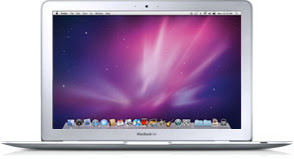
Earlier this year, I switched from my MacBook Pro to a new MacBook Air, aiming to move more of my content to the cloud, and have a less bulky device to take with me from office to office and trip to trip. For the most part, the experience has been very good, and if I can help it, I don't want to go back to thick laptops again, with their spinning hard drives and clunky optical drives. But the beautiful design and thinness of the machine also has made it susceptible to failure. For more than 18 months, MacBook Air's first and second generation customers have complained about defective hinges which are a design flaw with the machine, requiring potentially expensive replacement. Now, mine too have fallen victim.

The front of my MacBook Air with the very obvious crack...

A few weeks ago, when visiting partners with Barak Hachamov, my colleague at my6sense, he opened his MacBook Air, and we both audibly heard a cracking sound. The frame had a horizontal crack through it, and the screen became very wobbly, needing to be supported by something to lean on. He took his laptop to the Apple Store in Palo Alto, and as he resides in Israel and I am local, I was asked to pick it up. A week later, after taking his laptop home, my own MacBook Air decided to join the club.

Without any odd behavior on my part, without requiring any exceptional level of force or falls, or even knocking against anything, my own Air frame is cracked and the hinge has practically come apart at the base. Solidarity with Barak's machine? Perhaps.

The Rear of My MacBook Air, Hinge Askew...

So last night, I was back at the same Apple Store, telling them of my sad story. The folks at the Genius Bar commented on the relative newness of my machine (though not the latest and greatest) and said they see this problem frequently. The good news was there would be no charge, but they didn't have parts on site, so I'll be headed back at least two more times - first to drop it off, and later, of course, to pick it up.

Even without the cost of replacement, for which I am grateful, the interruption is definitely annoying. Assume perfect service, I should be without the laptop for a few days, and there's always the outside chance data could be lost, so I am backing up like a mad fool (again). But it has me thinking as well. By always demanding thinner products, lighter housing, and shinier form factors (See the iPhone 4G for example), are we increasing the chance of breakage? It seems there is an inherent design flaw that affected each of these MacBook Airs, one so prevalent that Apple's own tech support note on troubleshooting them says it could be repaired, even if out of warranty:
"You can take your MacBook Air to an Apple-Authorized Service Provider or Apple Retail Store for evaluation and repair if necessary, even if your product is out of warranty. If you previously paid for a repair for hinge-related issues that were not caused by accidental damage, you may be eligible for a refund. Contact Apple for more information."
Diving deeper, it seems this issue has been hitting Air owners for more than 18 months. About 150 people have contributed to a thread started in February of 2009 on the hinges breaking during normal use. Ars Technica covered the spike in complaints back in March of 2009 and Engadget in late February of 2009. But I didn't buy my own laptop until early 2010. Although it was refurbished, saving me some cash, I would assume the issue was known and examined.

While at the Apple Store, I got my first chance to see the newest MacBook Air devices - both the 13 inch and the 11 inch models. It's tempting, of course, to get this one fixed, wipe the drive, and sell it on eBay or Craigslist, just to move to the next generation, but I would have to warn the recipient that I couldn't guarantee the integrity of the device. It's pretty. It's functional. But it's broken.

November 01, 2010

AddThis Stats Show Spike in Google Buzz Sharing

Over the last 90 days of available statistics, popular multi-network sharing service AddThis shows few surprises in its top services selected by customers. Facebook dominates all options with nearly 40 percent of all shares, with Twitter and e-mail having just under ten percent apiece. But further down the chart, while most services saw single digit moves, up or down, two Google services are seeing significant growth - with Gmail logging an increase of 76%, and its companion network, Google Buzz, spiking, up 296% from the previous 90 day period. Sharing from AddThis to Buzz was good enough for #22 overall, just ahead of others including LinkedIn, Tumblr and Wordpress.

It's tempting to write off the blip as nothing more than a blip - a rule of small numbers. After all, the total percentage of shares to Google Buzz from AddThis totaled .25%, or 1 of every 400 shares. The top 10 services, comprising of Facebook, Twitter, Email, Print, Google, MySpace, Favorites, StumbleUpon, Messenger and Delicious, comprise more than 85% of all shares, leaving scraps for the remaining services - and one knows Google services aren't supposed to be "also rans" outside the top ten in most cases.

Google Buzz Shares Started to Spike on AddThis in Mid September

To dig deeper into the surprising data, I asked AddThis for more clarification.

While the company doesn't yet expose absolute sharing statistics, they reported that the rise in both Google Buzz and its companion Gmail is likely a recovery after a slow summer. The spike in Buzz propels it to the 5th most popular social network overall.

Buzz and Gmail Trending Up on AddThis

"Kids are back in school and sharing up a storm," wrote Justin Thorp, Community Manager for AddThis. "But... even with that, Gmail & Google Buzz are still seeing growth, usage, and excitement."

Aside from the 3-month bump, Thorp reports that StumbleUpon "has been the one that's seen some of the most continuous" growth.

Buzz's Spike Pushes It to the 5th Most Active Social Network on AddThis

Additional AddThis details on Google Buzz reveal that after the United States, which leads by a large margin, the next most active countries sharing to Buzz via AddThis are the Netherlands, India, Russia, Brazil, Germany, China, Canada, the UK, and France.

In contrast, the long since purchased, but still active, FriendFeed statistics show Turkey far outpacing the United States, followed by Italy, India and Pakistan.

While the world awaits Google's next round of social updates, long rumored, but still unclear, the loyal Buzz community eagerly awaits any signs of good news that show engagement and activity in the much-dismissed social sharing network. AddThis' statistics give a glimmer of hope, even if it is small numbers relative to other social tech titans.